Guide: SEO for Manufacturing Companies

Manufacturing companies can no longer rely solely on trade shows, industry relationships, and traditional sales channels to drive growth. Today’s buyers begin their research online, comparing suppliers, exploring product specifications, and evaluating potential partners long before speaking with a sales team.
This shift has created a major opportunity for manufacturers that invest in search engine optimization (SEO). When your company appears in the search results for the products, services, and solutions buyers are actively researching, SEO becomes a powerful engine for driving qualified leads and long-term growth.
At the same time, many manufacturing organizations are still underutilizing digital marketing. In fact, manufacturing, pharmaceutical, biotech, and transportation companies consistently report some of the largest gaps in marketing technology performance. That means many competitors are still struggling to fully leverage digital channels, leaving room for manufacturers with strong SEO strategies to gain a significant advantage.
In this guide, we’ll walk through how SEO can support growth for manufacturing companies, including the benefits of industrial SEO, the key strategies manufacturers should prioritize, how to measure success, and examples from our work with manufacturing clients.
What is SEO for Manufacturing Companies?
SEO for Manufacturing companies is the process of optimizing a manufacturer’s website so it appears in search results when potential buyers are researching products, suppliers, and technical solutions online. The goal is to attract highly relevant traffic and convert those visitors into qualified leads and customers.
For many manufacturers, this means ensuring their website ranks for searches related to product specifications, industrial applications, and problem-solving queries that engineers, procurement teams, and technical decision-makers use during the buying process.
SEO has become a core component of modern B2B marketing. In fact, more than 92% of marketers report using SEO to improve visibility across traditional and AI-powered search engines. As more buyers rely on search to evaluate vendors and solutions, companies that invest in SEO are better positioned to capture demand earlier in the buying journey.
The question manufacturers should be asking is no longer whether SEO matters, but whether their current strategy is strong enough to compete for the searches that drive real business opportunities.
The Benefits of SEO for Manufacturers
Manufacturers face a unique set of marketing challenges. Sales cycles are often long, audiences are highly specialized, and products can be complex or technical. Traditional marketing channels like trade shows, referrals, and industry publications still play an important role, but they often fall short when it comes to consistently driving new visibility and demand.
That’s where search engine optimization (SEO) becomes a powerful growth channel. By helping manufacturers appear in search results when buyers are actively researching solutions, SEO connects your business with the right audience at the right moment in the buying journey.
Here are a few of the key ways SEO benefits manufacturing companies.
Reach a Highly Targeted Audience
Manufacturing marketers often need to reach very specific audiences, from procurement teams evaluating suppliers to engineers researching technical solutions. SEO allows manufacturers to target high-intent searches related to product specifications, applications, materials, and industry problems.
By aligning your website content with the queries your audience is searching for, you can attract visitors who are already looking for the solutions your company provides.
Compete in a Crowded Industry
Many manufacturing industries are highly competitive, with both large global suppliers and smaller specialized companies competing for the same customers. SEO helps level the playing field by improving your visibility in search results when potential buyers are evaluating options.
Even smaller manufacturers can earn visibility by creating helpful, relevant content that answers the questions buyers are searching for during their research process.
Build Trust With Potential Buyers
Manufacturing purchases often involve significant investment and careful evaluation. Buyers frequently research suppliers, review technical information, and compare multiple options before contacting a sales team.
High-quality, optimized content helps position your company as a credible and knowledgeable partner. Product pages, technical resources, and educational content can all help buyers build confidence in your solutions as they move through the decision process.
Generate Long-Term, Sustainable Results
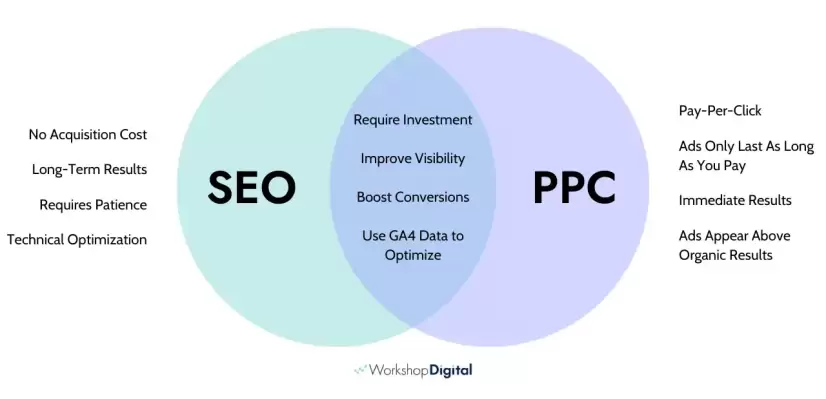
Unlike paid media campaigns that stop driving traffic once spending ends, SEO continues generating value over time. When pages rank well for important industry searches, they can attract qualified traffic for months or even years.
For manufacturers with long sales cycles, this sustained visibility is especially valuable. SEO helps build a steady pipeline of potential customers researching products and suppliers throughout the buying journey.
Key Strategies for Manufacturing SEO
Keyword Research for Niche Audiences
To appear in search results for your target audiences, you must figure out what they are searching for and how they are searching. Google’s search algorithms will look at a variety of factors, including the query, relevance of the pages, expertise, and location.
When done correctly, the keyword research process will help you identify industry-specific keywords and the technical terms your potential customers are searching for. It’s also important to research what kind of content appears for the keywords.
For example, let’s look at the keyword “industrial robot”. In looking at the SERP, it may seem like users searching for this may be looking to buy a robot. However, the majority of the Top 10 results are purely informational:
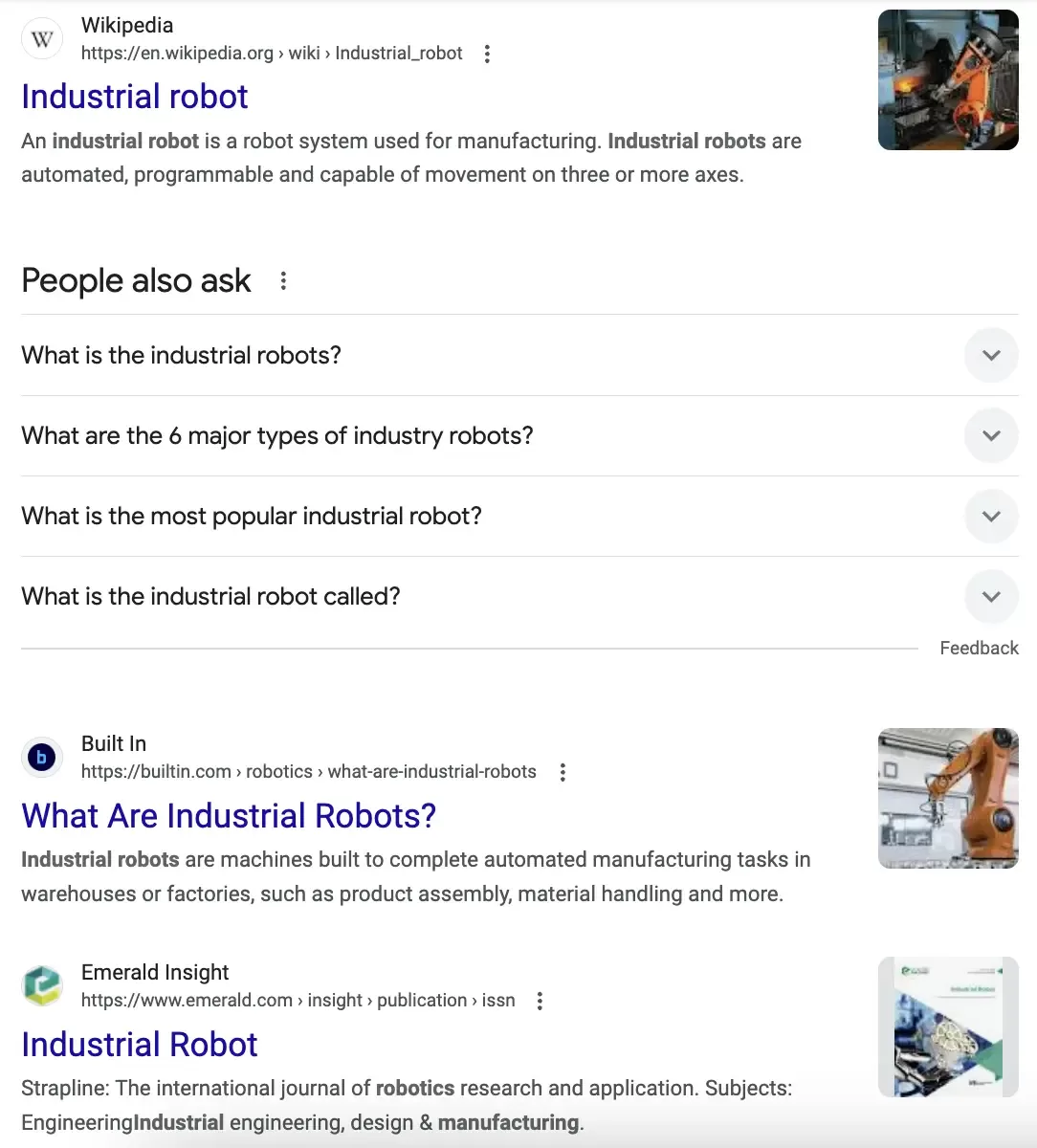
It’s important to not only drive traffic but also attract the right traffic. Some long-tail keywords may have low search volume, such as a specific product name, but those searches may come from users who are further along in the buying process than people searching for more general, higher-volume terms.
A few keyword research tools to start with include Ahrefs and Semrush, as well as Google Search Console, which will provide real data about what keywords you appear for and how many people click on your website after searching for a certain term.
On-Page SEO Best Practices
Your website has to be set up well to rank for relevant keywords and to help users convert once they arrive at your website. For users who are closer to converting, manufacturing websites should optimize product pages and internal search abilities. Part of the keyword research process should be looking into what questions people are asking about products, so you can include that information on the respective pages.
Let’s take a look at this product page from Generator Interlock Kit:
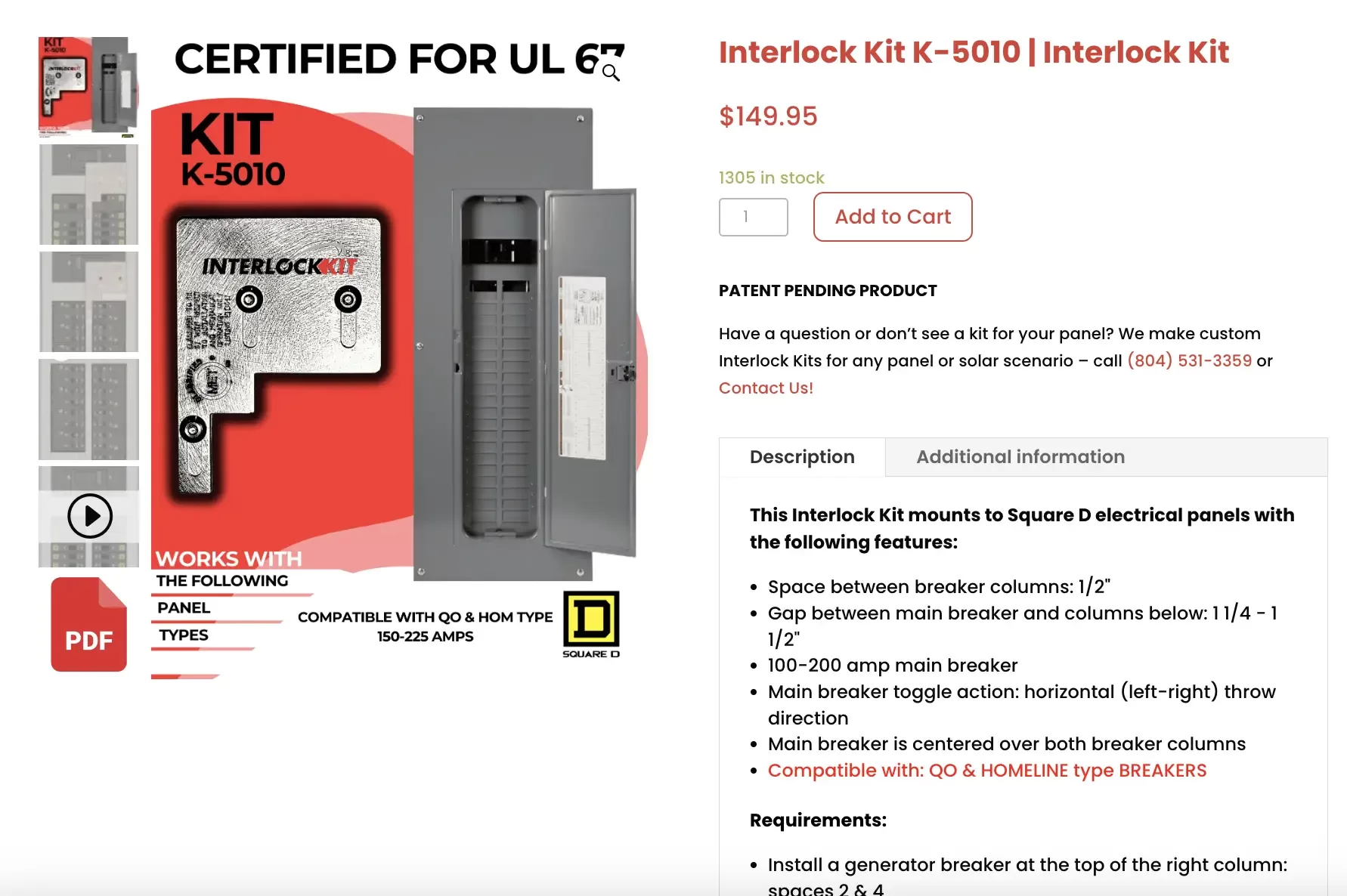
The product page offers information about the product features and requirements, and provides contact information for people who are interested and have questions.
It’s also important to include visual content of your products; after all, who wants to buy something without knowing what it looks like? The example includes pictures, a video, and a PDF with installation instructions.
Along with providing helpful content with target keywords, you can also use meta tags and structured data to further optimize your page for search results.
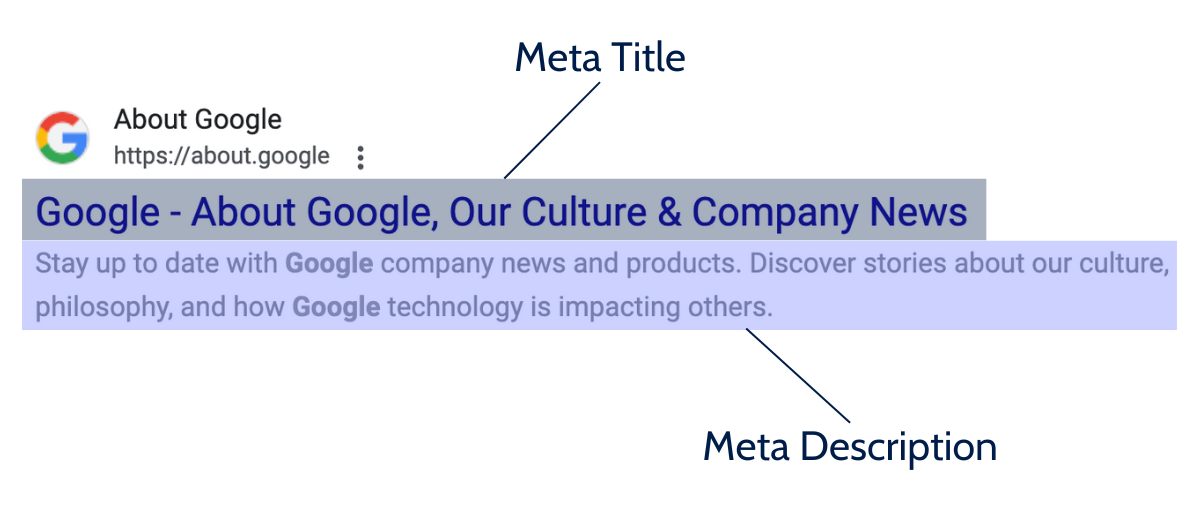
Meta titles are a ranking factor, so it’s important to provide information on what the page is, such as a product name or a blog title, along with your company name. We recommend keeping page titles under 60 characters so none of it gets cut off in search results. Meta descriptions are not a ranking factor, but can improve clickthrough rates since they provide further information on what the page is about. These should be 155 characters or fewer.
Product structured data can help your products appear in Google’s search features, such as “Popular products” and other Google Shopping features:
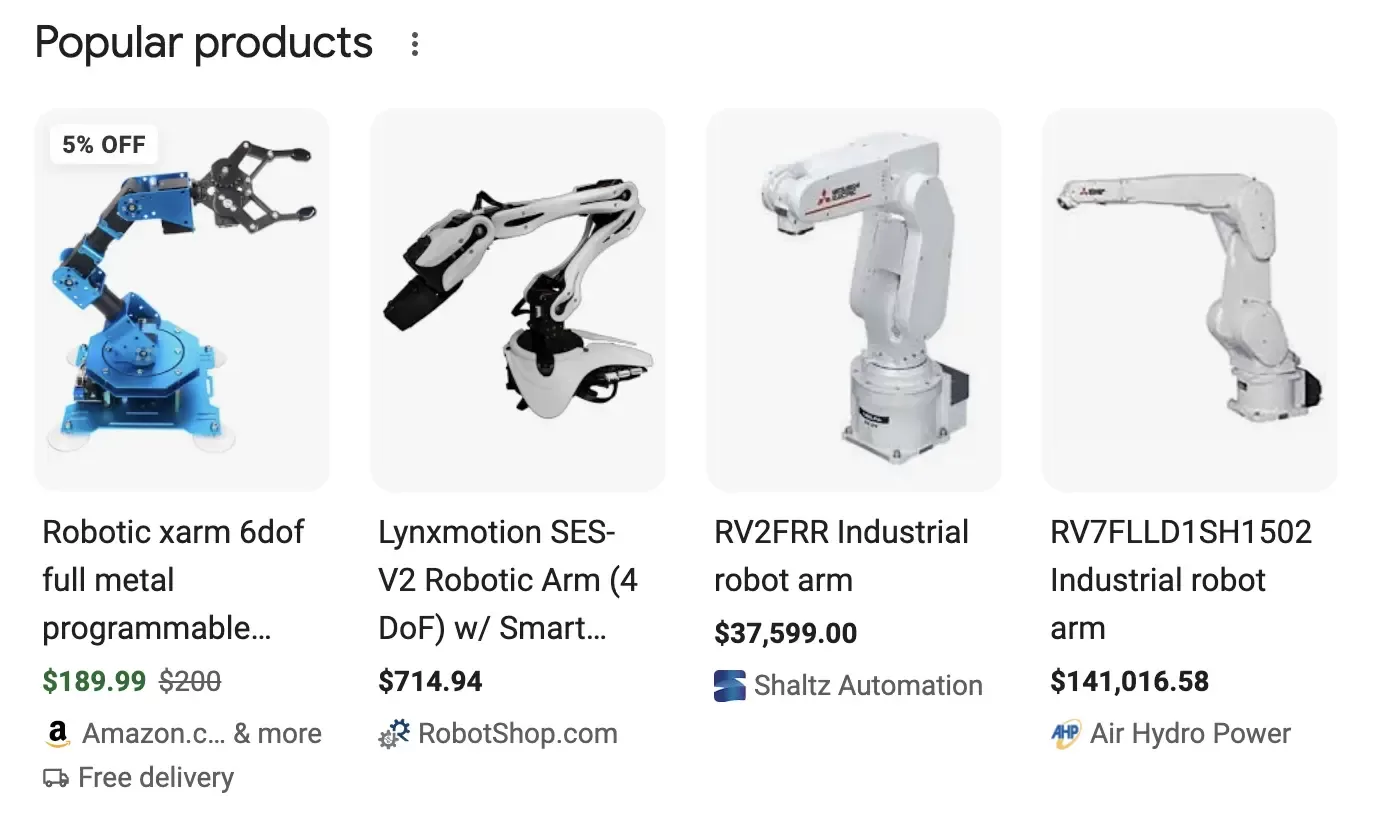
Structured data can be implemented in the code of your website or through Google Tag Manager. Learn more in our blog post about all types of schema markup.
Content Marketing for Manufacturing
Websites don’t thrive just off product pages; you also want to develop content that educates users and solves their problems by answering common questions in the industry. One way to do that is to have a blog. A blog can bring in users who may not be ready to buy and are starting in the buying journey, but can still end up converting. Blogs help you establish a presence in the industry, increase brand awareness, and strengthen relationships with potential customers.
Users further down the funnel may be looking for more information about your products and company as a whole, so it’s imperative to have built-out case studies, whitepapers, and even content about your business, such as an “About Us” page. We recommend conducting keyword research for these topics to figure out what questions people are asking and what people are looking for before they convert.
It’s also now important to optimize your content for Large Language Models (LLMs) as more people are using AI tools. Learn more from our article on Generative Engine Optimization (GEO).
Technical SEO
Along with content and on-page factors, it’s important to make sure your website is healthy from a technical standpoint. Even if your content is top-notch, if your site is too slow to load, people will leave before even getting there!
Some things to consider are:
Site speed: This is how fast your site loads.
Mobile responsiveness/performance: It’s important that websites can adjust the layout of the screen for different-sized devices.
Site structure: This takes into account whether your website is set up for users to navigate easily
XML sitemaps and robots.txt files: These files help search engines understand your site so relevant pages can appear in search results.
Canonicalization: This occurs when Google chooses what the main version of a page is.
Although these are some of the main themes to consider, there is a lot more to look at in terms of technical SEO, so check out our blog post on how we use technical SEO to boost content and rankings.
Local SEO
If your manufacturing company operates in or serves local markets, you must be set up for local SEO success. According to a Google representative, 46% of searches have a local intent. Users who are searching for “where to buy” and “near me” tend to be further down the marketing funnel and can be more likely to convert or purchase.
One way to increase your local visibility is to set up a Google Business Profile listing, which appears on the right side of the search results page:
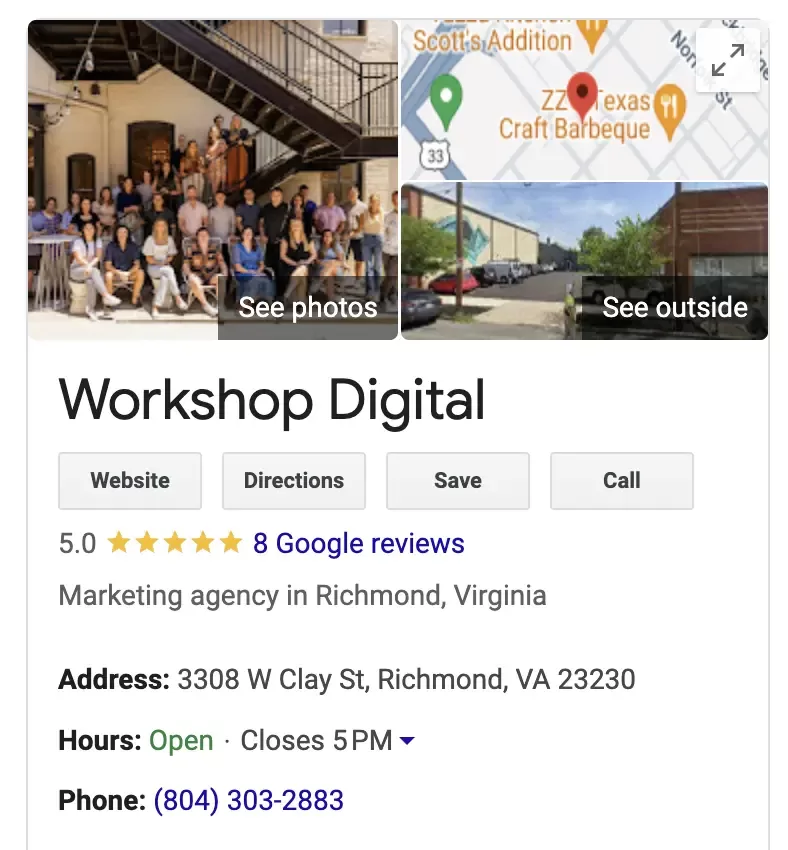
If you are looking to further solidify your local presence, you can see how we apply these principles to our own location-based strategies on our Richmond SEO services page, which serves as a blueprint for how we help businesses maximize their footprint in specific target markets.
With Google Business Profile (and Bing’s version called Bing Places), you can improve your visibility in your service areas and offer users links to your website, get directions, or call, as well as other information about your business. Google Business Profile offers over 60 different categories related to manufacturing, from “Auto parts manufacturer” to “Machining manufacturer”. You can also display your products and services, answer customer questions, and label your service areas if you operate in a specific region.
It’s important not to set up the Google Business Profile and not touch it again. Customers use it as a resource and will even ask questions or leave reviews, which are important to interact with.
Want to optimize your listing but not sure where to start? Check out our guide on “How to Optimize Your Google Business Profile”.
Linkbuilding
Especially if you’re a newer player in your field, one of the limiting factors to ranking well in organic search for competitive search terms could be that established players in the space have websites with higher “authority”, as determined by search engine algorithms.
Although these algorithms have evolved over the years to incorporate many more ranking factors than the number of backlinks a website or page has, quality backlinks (links from other websites to your website) still make a difference. Google and other search engines discover links from other websites to your site when their bots crawl the web and judge relevant, non-spammy links as votes of confidence in your brand or products.
So, look for ways to build backlinks from authoritative websites in your space to your website or important pages. Is your organization sponsoring, exhibiting, or speaking at a big industry event? Ask the facilitators for a backlink. Are there any popular or extremely relevant online publications in your industry? Reach out and ask to be a guest author or subject matter expert for their writers and link to your organization in your author byline.
To determine whether your SEO strategy needs backlink building, you can use SEO tools like Ahrefs, Moz, or Semrush to do competitor backlink analysis and discover the ways your organic search competition gains relevant backlinks.
Measuring SEO Success in the B2B and Manufacturing Industries
All of your SEO efforts will be for naught if you can’t track the success or find opportunities to improve. One way we do this at Workshop Digital is by setting key performance indicators (KPIs) that directly relate to your return on investment (ROI). This could include goals for organic traffic, conversion rates, and leads. It’s also important to ensure your analytics tracking tools are set up to track the performance of your SEO efforts so you can fine-tune your strategies and see growth over time.
What KPIs Should Be Measured for Manufacturing SEO?
To track the success of your SEO efforts, a few metrics to track include:
Organic Traffic: This includes any traffic received from organic search results and from Google Business Profile or Bing Places.
Organic Conversions: Any conversions from organic traffic should be counted in your organic conversion number.
Clickthrough Rate: This is the rate of people seeing vs. clicking on your website in search results.
Keyword Rankings: It’s important to analyze how well you are performing in search results and if there have been any changes.
SEO Case Studies: Manufacturing Industry Success Stories
I’ve been working with manufacturing companies in the SEO realm for over 3 years, and Workshop Digital has worked with them for nearly a decade. But don’t take my word for it; check out some of our results:




Optimize Your B2B Manufacturing Website Through SEO
The manufacturing industry can be extremely competitive, so it’s important to find ways to stand out. A well-planned and executed SEO strategy can lead to higher traffic and, in turn, a higher conversion rate to drive qualified leads. By focusing on keyword research, on-page factors, technical performance, and local searches, manufacturers can build trust and reputation in their field to show their expertise.
SEO is important in order to position yourself for long-term success in the market. A digital marketing agency can provide you with the tools and resources you need to achieve your manufacturing marketing goals. Reach out to us today to learn how we can help you grow.
This blog post was originally published on November 4, 2024, and was updated and republished on March 12, 2026.