In 2026, marketing remains an important growth driver across all industries. For banks and financial institutions, that pressure is even higher given the competitive and highly regulated nature of the space. When the goal is attracting new customers, improving retention, and staying competitive in an increasingly digital environment (which, realistically, is every institution’s goal), a strong bank marketing strategy becomes vital.
What is a Bank Marketing Strategy?
Bank marketing strategy refers to the approach financial institutions use to promote and position their products and services in a highly competitive marketplace. Like any other industry, banks need to connect with their target audience, build trust, and differentiate themselves from the competition.
Bank marketing strategies must also operate within strict regulatory frameworks, including advertising compliance requirements, data privacy laws, and financial disclosures that limit how products can be promoted compared to other industries.
Today, as consumer behavior has shifted significantly toward digital, effective marketing strategies prioritize digital channels.
According to the CMO Survey Highlights and Insights Report (Spring 2026), marketing is increasingly focused on efficiency-driven digital strategies as budget growth has slowed to just 1.7% over the last year. To combat these tighter budgets, AI adoption has surged, now powering nearly a quarter (24.2%) of all marketing activities to improve sales productivity and lower overhead costs.
This shift is also reflected in broader media investment trends. While digital marketing spending is projected to grow by over 8% this year, traditional advertising, including linear TV, is expected to see continued declines. This reinforces the ongoing move toward more targeted video investments like Connected TV (CTV), where marketers can better track performance and attribution.
Unlike many industries, trust plays a central role in financial services marketing. Messaging must balance acquisition goals with credibility, transparency, and long-term relationship building.
As channels continue to fragment across digital and traditional media, developing a clear marketing strategy for financial institutions is essential for aligning messaging, channels, and customer intent. This often requires shifting away from older allocation models to reach the right audience at the right time.
Digital Marketing Strategies for Banks
Banks and financial institutions rely on a mix of digital channels to attract new customers, support retention, and guide users through increasingly complex financial decision journeys. These strategies are most effective when aligned with intent, compliance requirements, and lifecycle stages.
SEO and Content Marketing
SEO and content marketing play a foundational role in helping banks capture high-intent financial queries and build trust early in the decision-making process. Because financial services are research-heavy, users often begin their journey with educational searches around products, rates, and financial planning.
For banks, this means optimizing for financial intent queries, such as loan comparisons, mortgage rates, or account options, while also building educational content that supports long-term decision cycles.
Local SEO is also important for banks and credit unions with physical branches, ensuring visibility in “near me” searches and driving in-person or hybrid customer engagement.
Paid Search for High-Intent Acquisition
Paid search allows banks to capture demand from users actively searching for financial products, especially in highly competitive categories such as mortgages, loans, and credit cards. At this stage, intent is strong, making visibility and message clarity very important to driving conversion.
It also plays a key role alongside SEO. While organic search builds long-term visibility and supports early research, paid search ensures a consistent presence for priority queries and helps banks compete where organic rankings are limited or still developing.
The most effective programs align paid search with SEO insights, using shared keyword data, messaging, and landing page strategies to create a more consistent and efficient search presence.
Because financial services are highly regulated, success also depends on maintaining precise, compliant messaging that builds trust while meeting performance goals.
Programmatic, Display, and CTV Advertising
Programmatic and display advertising help financial institutions reach broader audiences and build early-stage awareness using data-driven targeting across behavioral, demographic, and intent signals.
Connected TV (CTV) has become increasingly important in financial services marketing as investment shifts away from traditional linear TV toward more addressable, data-driven video environments. For banks, this creates new opportunities to reach household decision-makers with more relevant and targeted messaging.
These channels play an important role earlier in the customer journey by:
Building awareness at scale
Reaching new household decision-makers
Supporting upper- and mid-funnel engagement before search conversion
Reinforcing messaging before users move into active search and comparison
When aligned with search and other performance channels, programmatic, display, and CTV help create a more complete funnel by generating demand that can later be captured through high-intent channels.
Email and Lifecycle Marketing
Email and lifecycle marketing are essential for maintaining engagement after acquisition and building long-term customer relationships. Once a customer opens an account or engages with a product, banks rely on structured communication to guide usage, encourage adoption, and increase lifetime value.
These programs are typically driven by customer behavior, product usage, and lifecycle stage, allowing banks to deliver more relevant and timely messaging.
Common applications include:
Onboarding sequences that guide new customers through account setup and early usage
Cross-sell and upsell campaigns based on existing products and needs
Retention efforts focused on reducing churn and increasing engagement
Triggered messaging based on account activity or key customer actions
When executed well, lifecycle marketing helps banks move beyond one-time acquisition and build deeper, more durable customer relationships.
Personalization and CRM-Driven Campaigns
Modern bank marketing strategies rely heavily on first-party data and CRM or CDP systems to deliver more relevant and timely customer experiences.
By using data from customer interactions, product usage, and lifecycle stages, banks can better understand individual needs and customize messaging across channels.
This enables banks to:
Segment audiences based on behavior, product holdings, and lifecycle stage
Improve targeting and reduce wasted spend across acquisition channels
Deliver more consistent messaging across paid, owned, and lifecycle programs
As access to third-party data continues to decline, first-party data has become an advantage, allowing banks to maintain precision, strengthen customer relationships, and improve overall marketing performance.
Why Bank Marketing Strategy Matters for Growth, Trust, and Revenue
Marketing plays a strong role in how banks attract customers, build trust, and drive long-term revenue. In a competitive space, a well-defined strategy is key across several areas.
1. Brand Awareness and Visibility
In a crowded market, strong brand awareness helps financial institutions differentiate themselves and stay top of mind. Effective marketing ensures consistent visibility across both paid and organic channels, especially as customers move between research and decision-making stages.
Channels include programmatic advertising, paid search, and SEO-driven content, all of which help banks reach users at different points in their journey.
2. Revenue Growth
Effective marketing strategies are directly tied to revenue growth for banks and financial institutions. By attracting new customers, promoting relevant products, and encouraging existing customers to use additional services, marketing directly contributes to revenue growth.
Whether through upselling products like loans, credit cards, or investment products, or improving customer retention, a well-executed marketing strategy can significantly impact the bottom line.
An important component of this is closed-loop reporting and analytics, which allows banks to track the entire customer journey—from the initial marketing interaction to conversion. This allows for direct insights into the true ROI of specific campaigns, helping marketers understand what drives revenue and optimize future strategies.
By measuring campaign effectiveness accurately, financial institutions can make data-driven decisions that improve targeting precision, increase conversion rates, and support long-term profitability.
3. Promotion of Products and Services
Banks offer a wide range of financial products, from everyday accounts to complex lending and investment solutions. Marketing ensures that the right products are presented to the right customers at the right time.
This requires aligning product messaging with customer needs and delivering it through the appropriate channels, including paid media, search, content, and lifecycle marketing. Effective promotion not only drives acquisition but also supports ongoing engagement and cross-sell opportunities.
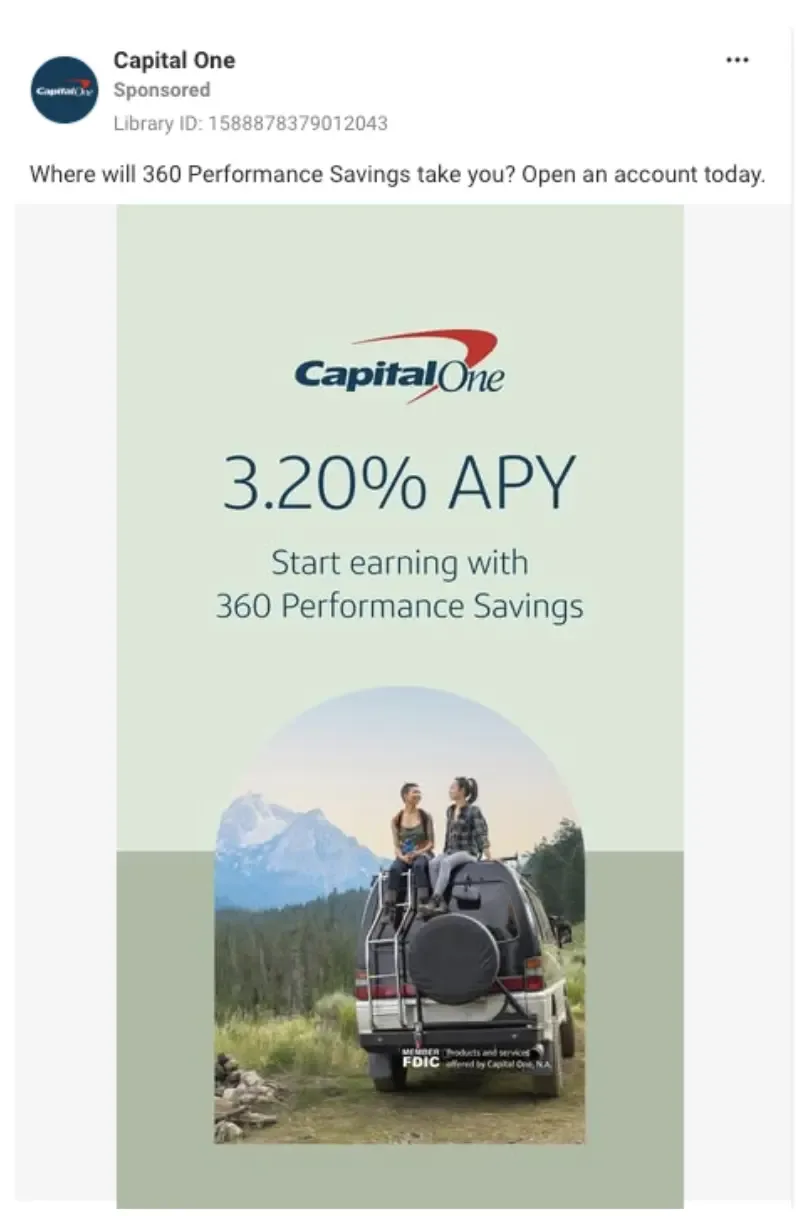
Using lifestyle-driven paid media to promote financial products as solutions for personal milestones rather than just numbers on a screen.
4. Customer Trust and Relationships
In an industry built on trust, marketing helps establish credibility and transparency. By consistently communicating your banks’ value proposition, banks can build lasting relationships with customers.
How banks communicate with their customers, address their concerns, and offer relevant products and services can significantly improve customer retention and foster loyalty. Ensuring consistent marketing messaging across channels, effective email communication, and a well-executed cross-sell strategy are just a few ways to strengthen customer trust and relationships.
5. Digital Transformation
We’ve come a long way in terms of technology, particularly in the banking world. With the rise of online banking and mobile apps, financial institutions must continuously evolve their marketing strategies to engage digitally savvy customers.
Modern bank marketing strategies should prioritize personalization, adopt omnichannel approaches, and leverage data heavily to drive decision-making and optimize strategies. The rise of mobile banking has set a high bar for user experience, where success is now measured by how effectively an institution can blend straightforward account management with real-time digital engagement.
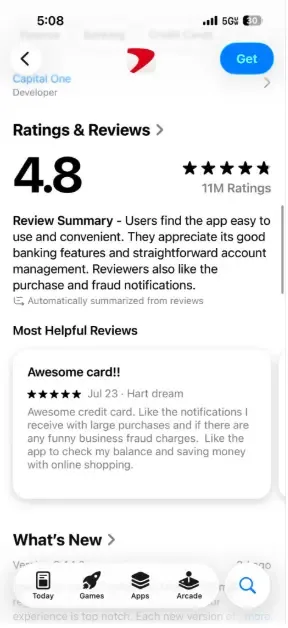
Social proof in action: In a digital-first industry, high app ratings and high-volume reviews act as the ultimate trust signal for prospective customers.
How Consumer Behavior is Changing in Financial Services
As financial decision-making becomes increasingly digital, consumer journeys are less linear and more fragmented. Customers now research, compare, and act in real time across multiple devices and touchpoints.
Micro-Moments and Real-Time Intent
As the world becomes more digital, consumer behavior has shifted toward “micro-moments”: real-time, intent actions like searching for information or making marketing decisions on the go. Mobile devices have fractured the consumer journey into non-linear paths, with shorter attention spans and less brand loyalty.
In financial services, this means banks need to capture customers in these key moments, addressing immediate needs like “I want to buy,” “I want to know,” or “I want to do.” Marketing strategies must be customized to respond to customers’ real-time intent, delivering relevant and personalized experiences when it matters most.
Life Events and Customer Intent
Live events, such as career changes, marriage, or buying a home, often prompt new financial decisions.
Banks can use digital tools that leverage first-party CRM data and behavioral triggers to predict these life events and offer timely solutions. By leveraging search intent, predictive analytics, and machine learning, financial institutions can identify the best time to engage their audience and customize marketing messages to fit specific life milestones.
This approach allows banks to be present when customers are making critical financial decisions, providing solutions that feel personalized and relevant.
How to Win in High-Intent Moments
Winning in high-intent moments requires more than just channel presence. Banks need to identify when customers are actively evaluating financial decisions and respond with relevant, timely messaging.
Channels like paid search and programmatic advertising play a key role by allowing banks to reach users based on intent, behavior, and context. Success depends on how well these signals are used to prioritize the right audiences and deliver messaging that matches where users are in their decision process.
Audience Targeting Strategies
Effective audience targeting helps banks focus on users who are most likely to convert, while also tailoring messaging to their level of intent and familiarity.
Audience approaches include:
Third-party audiences: Built from aggregated data, these audiences help expand reach across display, video, CTV, and audio. In financial services, they often include high-intent segments such as first-time home buyers, real estate researchers, or high-income households exploring upgrades.
Browsing audiences: Based on content consumption and keyword behavior, these audiences reflect active research. One effective approach is to use insights from high-performing paid search terms to identify and reach users engaging with related financial content across the web.
Remarketing audiences: These focus on users who have already interacted with your site or products. For example, someone who spent time on a mortgage page can be re-engaged with more specific messaging that reflects their stage in the decision journey.
Bringing these audience strategies together allows banks to move beyond broad targeting and focus on relevance. The more closely messaging aligns with user intent and behavior, the more likely it is to drive engagement and conversion.
Message Control and Channel Alignment
In a world where consumers expect immediate and accurate information, controlling your bank’s messaging across all channels is important. Paid search, for example, allows banks to customize their message directly to users who are searching for specific financial products or services. This becomes even more effective when ad messaging and landing pages are fully aligned, creating a seamless experience from search to conversion.
Paid ads and customized landing pages allow banks to control messaging in ways that organic search can’t. This ensures consistency across all bank marketing efforts and helps reinforce brand accuracy at every touchpoint.
This level of control ensures customers receive the right information at the right time, which strengthens the overall customer experience and improves conversion rates.
In channels such as Google Ads, there are some restrictions when it comes to advertising in the financial sector, so ensure you align with their advertising policies. You can read more information on what is approved or not approved here.
Paid vs. organic control
Paid channels give banks greater control over when and how messaging appears, including targeting, timing, and creative. Organic channels, by contrast, depend on search engine rankings and evolving algorithms.
This level of control is especially important in financial services, where messaging must remain consistent, accurate, and compliant across all customer touchpoints.
Landing page alignment
Landing pages need to clearly match the messaging and intent of the ad or search result that drove the visit. Strong alignment reinforces trust, improves user experience, and increases conversion rates.
When messaging and landing experiences are disconnected, it can lead to confusion, drop-off, and potential compliance issues in a regulated environment.
Compliance considerations
Compliance is a core factor in financial services marketing and directly influences how campaigns are structured and executed. Banks must ensure that all messaging meets regulatory requirements, includes necessary disclosures, and accurately represents products and terms.
This applies across both paid and organic channels, making consistency and oversight critical to maintaining trust and avoiding risk.
Workshop Digital Helps Regional Bank Navigate Complex Merger
76% of total conversions were driven by branded search, ensuring a seamless and controlled customer experience during a high-change period.
During a major acquisition, we implemented a paid media strategy focused on brand protection and high-converting landing pages. This ensured that customers searching for merger updates were directed to accurate, compliant information rather than outdated organic pages or external news coverage.
How Digital Marketing Drives Revenue for Banks and Financial Institutions
Digital marketing drives revenue by helping banks reach the right customers at the right time with relevant, well-controlled messaging.
Success depends on understanding customer needs, aligning messaging with intent, and delivering consistent experiences across channels. By using data to guide targeting and personalization, banks can improve engagement, increase conversion rates, and build stronger customer relationships.
When integrated with broader marketing efforts, digital channels extend reach, improve efficiency, and create more measurable paths to revenue.
Key Performance Metrics That Drive Growth
Banks and financial institutions typically evaluate digital marketing performance through a combination of efficiency and revenue-focused metrics, including:
Cost per acquisition (CPA)
Customer lifetime value (LTV)
Conversion rate (CVR)
Return on ad spend (ROAS)
Lead-to-customer conversion rate
These metrics help financial institutions understand not just campaign performance, but the long-term value of acquired customers.
Attribution and Closed-Loop Measurement
Closed-loop measurement allows banks to connect marketing activity to actual business outcomes by tracking the full customer journey, from initial engagement through to conversion.
This visibility helps identify which channels, campaigns, and messages are driving revenue, not just traffic or leads. It also supports more effective optimization across paid, owned, and lifecycle marketing efforts.
With stronger attribution, banks can improve targeting, increase conversion efficiency, and make more informed budget decisions.
Marketing’s Role in Revenue Growth
Ultimately, digital marketing is a revenue engine for banks when executed strategically. It supports acquisition by reaching high-intent users, improves retention through lifecycle engagement, and increases product adoption through targeted cross-sell and upsell campaigns.
When paired with a strong digital measurement strategy, digital marketing becomes a direct driver of profitability, not just awareness.
Stay Updated on Financial Marketing Trends
If you found this blog helpful, stay ahead of what’s changing in financial services marketing.
Subscribe to our bi-weekly Shop Talk newsletter for practical insights on SEO, paid media, analytics, and strategy, delivered by a team that works directly with banks and financial institutions to drive measurable growth.
If you’re exploring ways to improve your own bank or credit union’s marketing strategy, our team is here to help. Get in touch to see how we can support your goals with a tailored, data-driven approach.
This blog post was originally published on October 24, 2024, and was updated and republished on April 28, 2026.
Maddy Kline has been working in the digital marketing industry since 2021, helping brands grow their online presence through thoughtful strategy and data-driven insights. She specializes in organic search growth, content strategy, and optimization, with a focus on identifying scalable marketing opportunities that drive strong results.
Throughout her career, Maddy has partnered with clients across a variety of industries, with much of her experience supporting home services brands operating within franchise systems. Her work centers on helping multi-location businesses strengthen their digital visibility and expand their reach through strategic SEO initiatives and performance analysis.
Maddy holds a B.S. in Marketing Strategy from the University of North Carolina Wilmington, which laid the foundation for her work in digital marketing and growth strategy. She enjoys the constant evolution of the industry and the opportunity to continuously learn, experiment, and uncover new ways to solve complex marketing challenges. Being part of a collaborative, curious team that values professional growth is what excites her most about her work.
Outside of work, Maddy enjoys spending as much time outdoors as possible, whether that’s hiking, paddle boarding, biking around her neighborhood, or playing volleyball. When she’s not outside, she’s usually in cozy mode with a good book or working on a knitting or crochet project.