
When people search for financial or health-related information, they aren’t just browsing. They are making decisions that can impact their health, security, and finances. Search engines are becoming more sophisticated, and the demand for credible, trustworthy content has never been higher, especially for topics that impact our health, safety, and financial well-being. One inaccurate recommendation or claim can do real harm to both users and your brand’s credibility.
This is where Google’s concept of “Your Money or Your Life” (YMYL) comes into play. YMYL is a term introduced by Google in their Search Quality Rater Guidelines that encompasses any online content that directly impacts critical aspects of our lives, from medical advice to financial guidance.
For organizations in finance and healthcare, this means trust isn’t optional; it’s a ranking factor. Search engines prioritize YMYL content that demonstrates experience, expertise, authoritativeness, and trustworthiness, and content that falls short means you risk losing visibility, traffic, and conversions.
In this blog post, we will dive into YMYL content, why it’s important for financial and healthcare organizations, and how these guidelines shape your SEO and content strategy moving forward.
What is YMYL (Your Money or Your Life)?
According to Google’s Search Quality Rater Guidelines, Your Money or Your Life (YMYL) topics are any that “have a high risk of harm because content about these topics could significantly impact the health, financial stability, or safety of people, or the welfare or well-being of society”.
For example, if you’re considering a significant investment or seeking medical advice, you need to trust that the information in search results comes from credible experts with relevant experience. Because of this, Google expects YMYL content to be created (or at least reviewed) by credible experts with relevant, real-world experience.
In short, if your content can influence how people manage their money, make healthcare decisions, or protect themselves and others, it likely falls under YMYL and will be held to a higher quality standard in search results.
What Falls Under YMYL?
Google groups YMYL into four main focuses:
- YMYL Health or Safety: This includes topics that could harm the mental, physical, and emotional health of people, or any form of safety (physical, online, etc.).
Examples: medical conditions, treatment options, mental health resources
- YMYL Financial Security: This focuses on topics that could damage a person’s ability to support themselves and their families.
Examples: investments, retirement planning, tax guidance
- YMYL Society: This includes topics that could negatively impact groups of people, issues of public interest, etc.
Examples: government policies, legal information
- YMYL Other: This focuses on topics that could hurt people or negatively impact society.
Examples: advice for major life decisions, anything involving personal risk
The Role of E-E-A-T in YMYL Content
YMYL defines which topics are held to a higher standard, and E-E-A-T explains how Google evaluates them. The acronym E-E-A-T stands for Experience, Expertise, Authoritativeness, and Trustworthiness. These factors are used to assess whether a page or topic is high or low quality. Bolstering E-E-A-T signals can help improve the quality and credibility of your website, which in turn can improve rankings, organic traffic, and conversion rates.
For financial and healthcare organizations, strong E-E-A-T is not just about building credibility; it directly influences visibility, organic traffic, and conversions. Pages that clearly demonstrate each signal are more likely to earn trust from both users and search engines, while weak or missing signals can limit performance.
Experience
Experience is the newest factor Google added, with a focus on firsthand or life experience. The writer must prove they know about the topic because they lived it themselves.
For YMYL content, this could include insights from practitioners, professionals who work in the field, or organizations with direct experience serving customers in these areas. Demonstrating experience helps reassure users that the advice or information is coming from someone who truly understands the subject matter.
Expertise
Expertise reflects the depth of knowledge behind the content, which is especially important for YMYL topics, as misinformation can lead to serious consequences.
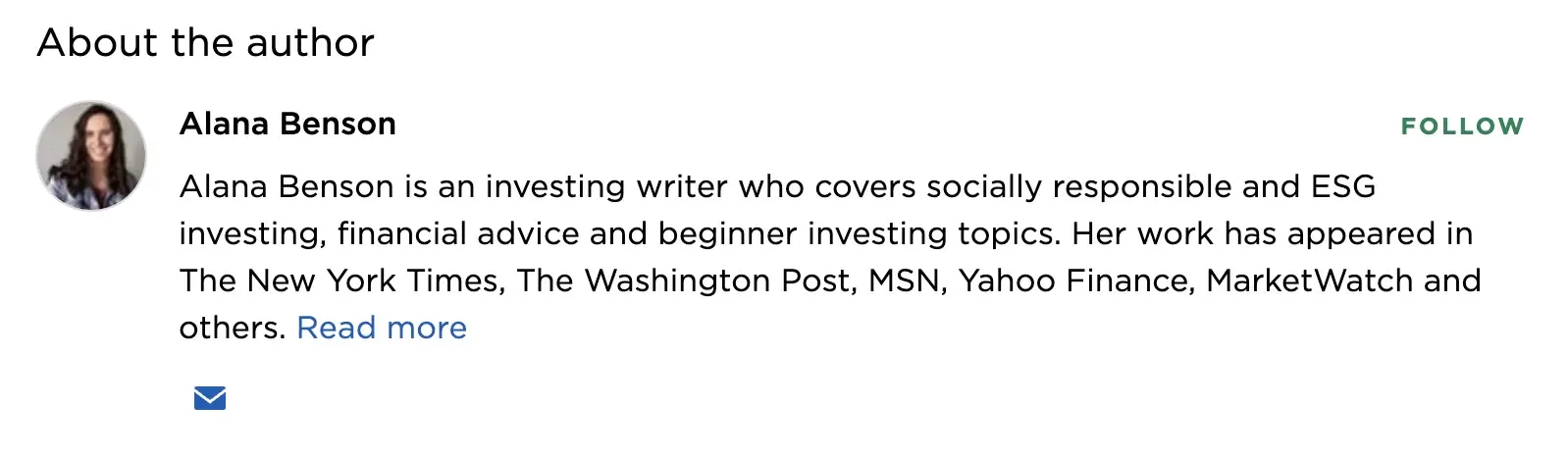
For example, a NerdWallet article titled “5 Pieces of Investment Advice” has an author bio that provides background information on the writer and where their pieces have been published, showing that her work has appeared in high-volume, credible sources. There is also a link to learn more about her background, proving her expertise in the topic.
Authoritativeness
Authoritativeness is established by others recognizing you as an expert or a go-to source. Signals of authoritativeness can include backlinks from reputable websites, mentions from trusted publications, and consistent visibility across authoritative industry platforms. When credible sources link to your content, they send signals to Google and other search engines that your site is a recognized source within your industry.
Trustworthiness
Google considers trustworthiness as the most important aspect of E-E-A-T. This aspect focuses on whether the page is accurate, honest, safe, and reliable.
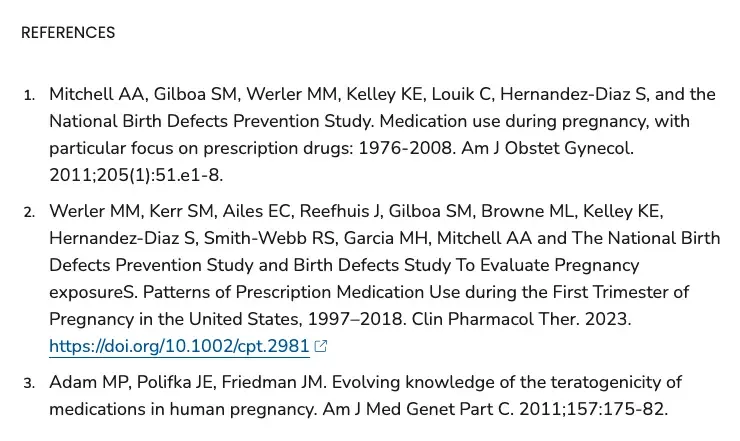
Trust signals can include transparent sourcing, accurate and up-to-date information, disclaimers where needed, secure websites, and visible update or review dates. For example, at the bottom of an article about Medicine and Pregnancy, the CDC includes a revision date and a list of sources used:
If a page is untrustworthy, it will have a low E-E-A-T rating regardless of how experienced, expert, or authoritative it may seem.
Impact of YMYL on Financial Industries
Since financial decisions can directly affect a person’s stability and long-term security, Google applies heightened scrutiny to financial content. Whether you’re publishing guidance on budgeting, retirement planning, loans, or investment strategies, YMYL and E-E-A-T signals play an important role in how that content performs in search.
Consumers are increasingly becoming more reliant on online resources for financial advice and information, which means there is high competition for the top spots in search results. CreditKarma reports that 43% of people actively seek financial advice online or through social media platforms.
As competition increases and Google continues to adjust its ranking systems, financial content that lacks clear expertise and transparency is more likely to struggle. On the other hand, content created with YMYL guidelines in mind can serve as a trusted resource, leading to stronger rankings, increased organic traffic, and better brand reputation.
Impact of YMYL Content on the Healthcare Industry
The stakes are even higher in healthcare, where inaccurate or outdated information can lead to serious harm. Users rely heavily on search to research symptoms, conditions, and care options, making trust a non-negotiable factor in content.
Research shows that 58% of U.S. adults have used the Internet to look for health or medical information, and 42% used it to communicate with a doctor’s office. This means that healthcare content doesn’t just drive website traffic, but it often influences real-world care decisions and patient relationships.
Potential patients are most likely searching for a cure or fix for a specific health issue they are facing. For example, if you were searching for a cure for a sore throat and ended up reading an untrustworthy post, you could end up further harming yourself. That risk is precisely why healthcare-related YMYL content is evaluated more rigorously and why Google prioritizes pages that demonstrate strong E-E-A-T signals, up-to-date information, and transparent sources.
For healthcare organizations, aligning your content with YMYL standards is about protecting users, building credibility, and supporting better patient experiences.
YMYL and SEO: A Strategic Partnership
You’ve written quality, relevant content that follows best practices for YMYL industries, but that’s only half of the equation. Even the most accurate, expert-led content won’t perform well if it can’t be discovered. That’s where SEO comes in.
SEO focuses on providing users with the best results, so its goals coincide with the objectives of creating E-E-A-T content for YMYL businesses. When SEO best practices align with E-E-A-T principles, they help ensure your content meets Google’s quality expectations and reaches the audiences who need it most.
Here are a few tips from an SEO Manager (notice the expertise plug?):
Find Demand for New Content
Understand where there is demand for new content. Don’t create a new piece of content where there are already a hundred other articles saying the same thing. SEO-driven research, such as competitor analysis and content gap analysis, helps uncover opportunities where your company can add meaningful value. This ensures new content addresses unanswered questions or underserved topics, rather than just adding more noise.
Use Experienced Topic Experts
For YMYL topics, who contributes to the content is just as important as what is being said. Use professionals with expertise in the areas you are writing about to boost your credibility. For example, if you are writing a post about mammograms, having a quote from a gynecologist who has years of experience with the procedure can prove trustworthiness to both users and search engines.
Build Trust Throughout the User Journey
Trust should be evident across every page, not just in long-form content. Clear author attribution, patient or client testimonials, professional certifications, awards, and third-party reviews all help reinforce that your organization is reputable and reliable.
These signals help support E-E-A-T while also improving conversion rates by reducing uncertainty for users making high-stakes decisions.
Follow Linking Best Practices
Linking plays an important role in reinforcing trust and authority. Referencing credible, authoritative sources, such as government agencies, medical institutions, or well-known financial institutions, helps validate your claims and provide additional context for readers.
Internal linking is also important. Connecting related content across your website helps users navigate complex topics while signaling topical depth and relevance to search engines.
Wrapping Up
Creating content that adheres to Google’s quality guidelines is imperative, especially in YMYL industries. As users increasingly rely on online resources to guide vital decisions, you must rise to the challenge of delivering accurate, trustworthy content in search results for prospective customers or patients.
Let us help you! Learn more about our SEO services and how we can partner with you to create helpful YMYL content.
Interested in receiving an E-E-A-T audit for your website? Contact us today.
This post was originally published on December 23, 2024, and was updated on February 11, 2026.