
If you've searched for anything online recently, you've probably noticed things feel… different.
Sometimes Google gives you an answer before you ever click a website. Sometimes you skip Google altogether and ask ChatGPT. Other times, you're having a conversation with AI instead of scrolling through a page of search results.
It's easy to assume search has been completely reinvented.
It hasn't.
Underneath all the new interfaces and AI-generated answers, the same core process has been quietly powering search for decades. Before Google can answer a question, before ChatGPT can reference a webpage, and before an AI assistant can recommend a business, that information has to be discovered, understood, and organized.
So, how do search engines work? They discover information, understand what it's about, organize it, and determine when it's the best answer to a person's question.
That's exactly what search engines do.
The technology behind it is fascinating. And while AI has changed how we receive answers, it hasn't changed the fact that someone still has to organize the world's information first.
Let's start there.
What is a Search Engine?
The internet is growing every second of every day.
Every day, businesses publish blog posts, news outlets break stories, ecommerce stores add products, and someone, somewhere, decides the world needed another recipe for chocolate chip cookies (my favorite, so give me all the recipes).
If you had to find one specific piece of information by manually searching every website, you’d be there for…well...a while.
Search engines exist to solve exactly that problem.
At their core, search engines have one job: organize an incredibly messy internet so you can find what you’re looking for in a matter of seconds.
I like to think of Google as the world's most obsessive librarian.
Imagine a library where new books arrive every minute. Some books are updated. Others disappear. A few are duplicates. Some are full of helpful information, while others are complete nonsense.
A good librarian doesn't just throw every book on the shelf. They organize it, categorize it, remove outdated copies, and help people find the most useful book when they ask a question.
Google does the same thing, just at a scale that's almost impossible to comprehend.
Google has discovered trillions of webpages across the internet. Yet only a tiny fraction ever become part of its searchable index. Why? Many pages are duplicates, low quality, inaccessible, or simply don't provide enough value to users. In fact, Google's own antitrust filings describe the overwhelming majority of the pages it crawls as spam, duplicates, or otherwise low quality. One analysis of those filings estimated that only about 1–2% of everything Google crawls ultimately makes it into search results. That's a pretty good illustration of our librarian analogy. Most of what arrives at the library never makes it onto a shelf.
Here's why that matters.
Google's goal has never been to index everything. Its goal is to index the pages that help people find reliable answers.
Before Google can decide which page deserves to rank first, it has to know the page exists in the first place.
The first step is crawling.
How Does Google Find New Pages?
The first challenge search engines face is surprisingly simple.
How do they know a webpage exists?
Unlike a library, nobody hands Google a neatly organized list of every new page published on the internet. Websites are created every day. Existing pages are updated. Others disappear without warning.
So Google sends out automated programs called crawlers (you'll also hear them called Googlebot or spiders) to explore the web around the clock.
Think of Googlebot as an incredibly curious tourist.
It lands on a webpage, reads what's there, follows links to other pages, and repeats the process over and over again. Every link it discovers is another path to explore.
If you've ever gone down a Wikipedia rabbit hole by clicking one link after another, congratulations, you've crawled the internet. Googlebot just does it much faster.
Google discovers pages in several ways:
By following links from other websites
Through links within your own website
Via XML sitemaps that website owners submit
By revisiting pages it already knows about to check for updates
This is one of the reasons internal linking matters so much. When you link related pages together, you're not just helping visitors navigate your website. You're giving Google additional pathways to discover your content.
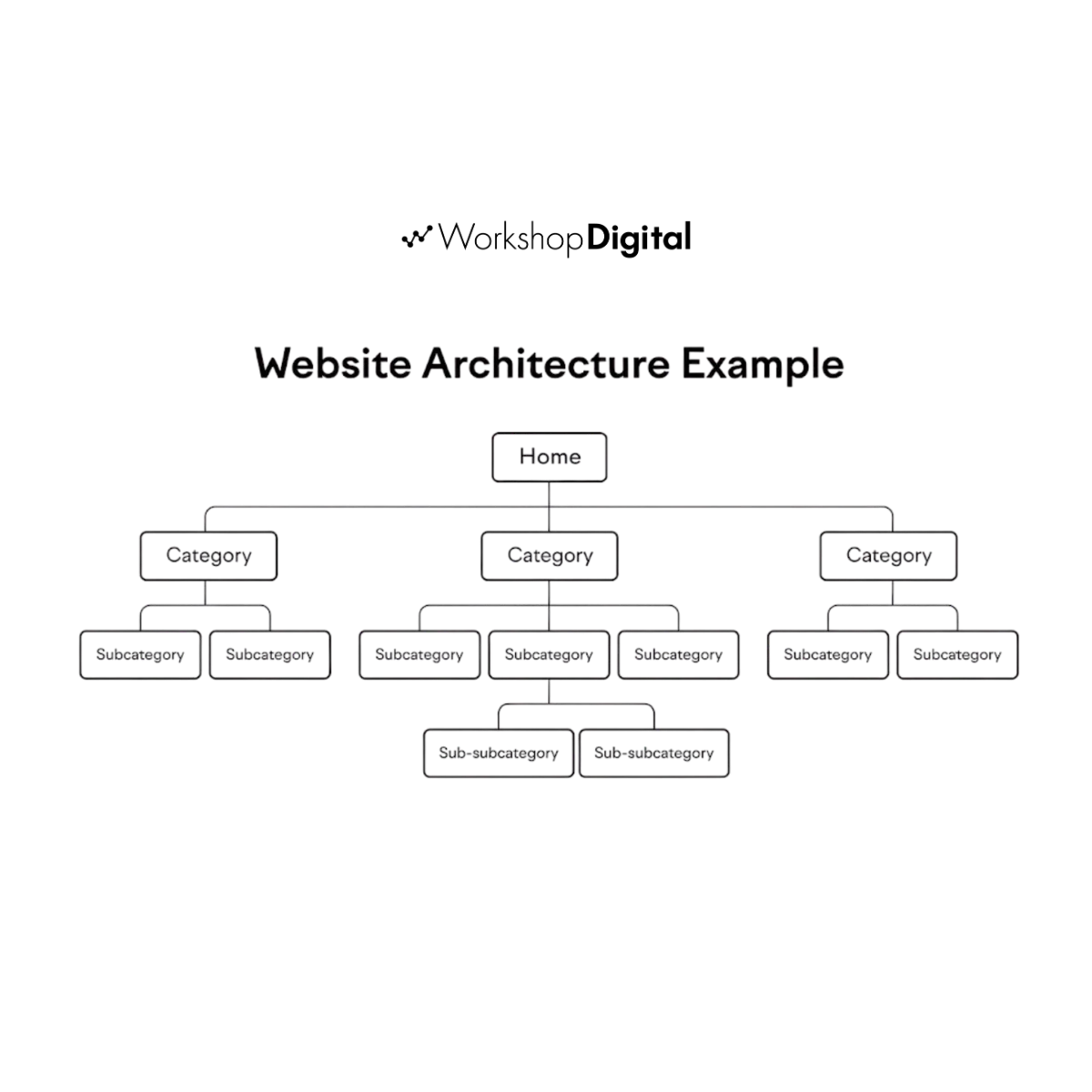
Of course, discovering a page doesn't guarantee it'll appear in search results. One of the biggest myths I still hear is, "I published a page, so Google should know it's there."
Unfortunately, publishing a page doesn't automatically put it in Google's search results. Google has to discover it first. If nothing links to that page and Google has no other way to find it, it's a bit like hiding a book in the basement of a library and expecting someone to check it out. Even after Google discovers a page, there's no guarantee it'll be indexed. Google Search Advocate John Mueller has said it's perfectly normal for a meaningful portion of a website's pages to never make it into the index, often because they're duplicated, low quality, or simply don't provide enough value.
Also, sometimes Google can't access a page because it's blocked by a robots.txt file. Other times, the page requires a login, returns an error, or simply doesn't contain enough useful information to justify indexing.
Finding a page is only the first step. Once Google has crawled it, the next question becomes: "Is this worth adding to our library?"
That's where indexing comes in.
Indexing: How Search Engines Store and Organize URLs
Finding a webpage is one thing; understanding it is another. Once Google discovers a page, it has to figure out what it’s actually looking at.
Is this a recipe? A product page? A news article? A case study? Is the information current? Is it original? Can people access it? Is it even useful?
Only after Google answers those questions does it decide whether the page belongs in its index.
This is one of the biggest misconceptions about search.
When you type a question into Google, it isn't searching the live internet in real time. If it did, every search would take forever. Instead, Google searches its own index, which is essentially a massive catalog of webpages it has already discovered and understood.
It's a little like searching your computer.
When you use your computer's search bar to find a document, it doesn't open every file one by one looking for the right answer. It searches an index that was built ahead of time. Google works much the same way, just on a scale that's difficult to wrap your head around.
Its index contains hundreds of billions of documents, representing only a fraction of the pages Google has discovered across the web. During court testimony in 2023, Google revealed that its index contained roughly 400 billion documents, all selected from trillions of pages it had crawled. The company no longer publicly shares the size of its index, so today's number is almost certainly much larger, but it gives you a sense of the scale we're talking about.
And Google doesn't simply save a copy of a webpage. It tries to understand it.
Some of the questions Google's systems are asking include:
What is this page about?
What questions does it answer?
Who created it?
Is this information unique?
How does this page relate to other pages on the web?
This is why SEO today has become much more than keywords. Years ago, repeating the same phrase over and over could sometimes help a page rank.
Today, Google is much more interested in understanding the overall topic, the context, and whether the page genuinely helps someone solve a problem.
Here's another important point.
Not every page earns a spot in Google's index. Pages that are duplicated, extremely thin, blocked from indexing, or otherwise low value may never become searchable at all.
Simply publishing content doesn't guarantee anyone will ever find it. Once a page is indexed, though, it's officially in the running. Now Google has to decide when and where it should appear.
That's where ranking begins.
So… How Does Google Decide What to Rank?
Imagine you search for "best CRM for a manufacturing company."
Google has already done the hard work. It discovered millions of webpages, analyzed them, and added many of them to its index.
Now it has a different problem.
Out of all those pages, which ones should appear first? The answer isn't as simple as, "The page with the most keywords wins."
In fact, Google has repeatedly said there isn't a single ranking score or a checklist of boxes to tick. Instead, its ranking systems evaluate hundreds of signals to determine which pages are most likely to answer your question.
I know… that's probably not the satisfying answer you were hoping for. But if you think about it, it makes sense.
When you ask a friend for a restaurant recommendation, you don't judge their answer based on one thing. You naturally consider several factors:
Do they actually know what they're talking about?
Have they been there?
Does the recommendation fit what I'm looking for?
Do I generally trust their opinion?
Google is trying to answer similar questions about webpages.
Is this page relevant?
Does it actually answer the question someone searched for, or is it only mentioning the topic in passing?
Can this source be trusted?
Has the website built a reputation for publishing accurate, helpful information? Do other reputable websites reference it?
Is the content helpful?
Does it answer the question clearly? Is it original? Does it provide value beyond what's already available?
Is it a good experience?
Can people easily access the page? Does it load quickly? Does it work on mobile devices? Is it filled with intrusive pop-ups?
None of these factors guarantee a #1 ranking on their own. Instead, Google looks at the overall picture.
Think of it like hiring someone for a job: You probably wouldn't hire a candidate because they had one impressive skill while ignoring everything else. You'd consider their experience, knowledge, communication, references, and whether they're a good fit for the role.
Google similarly approaches webpages.
That's also why there isn't a magic SEO trick. There's no secret keyword percentage. No hidden "rank me higher" button. The pages that consistently perform well tend to do a lot of things well at the same time. And for years, that was largely where the story ended. Google found pages, indexed them, ranked them, and gave you a list of links to choose from.
Today, there's one more step… Sometimes Google doesn't just rank the answers. It generates one.
The Biggest Change Isn’t Search. It’s What Happens Next.
For years, the process was pretty simple. You asked a question, Google searched its index, it ranked the most relevant webpages, and you clicked one.
Today, there’s often another step in between.
Instead of immediately sending you to a website, Google may generate an AI Overview. ChatGPT might pull together information from multiple sources into a single response. Perplexity may answer your question while citing the websites it used.
The goal is to help you understand it faster. Think about the last time you searched for something like: "How do I choose the right CRM for a manufacturing company?"
Ten years ago, you'd probably open several articles, compare their advice, and form your own conclusion. Today, AI can do much of that comparison for you. It reads across multiple sources, identifies common themes, and presents a summarized answer in seconds.
That's incredibly convenient. It's also why search feels so different.
Instead of this: Question → Search results → Click → Read → Compare → Answer
Many searches now look more like this: Question → AI summarizes multiple sources → Answer (with or without a click)
That's a huge shift in how people discover information. It's also reflected in the data.
Recent studies estimate that well over half of Google searches now end without a click to another website, and when an AI Overview appears, that percentage climbs even higher. People are increasingly getting the information they need directly on the results page rather than visiting multiple websites.
Does that mean websites no longer matter? Not even close.
Here's the interesting part. AI answers still need somewhere to get their information.
Whether it's Google generating an AI Overview or ChatGPT citing external sources, these systems still rely on high-quality content published across the web. They can't summarize expertise that doesn't exist.
In other words, the websites haven't disappeared; they've become the foundation that AI builds on.
SEO Isn’t Dying, It’s Changing
If you've made it this far, you've probably noticed something. The fundamentals of search haven't changed nearly as much as the experience has.
Search engines still crawl the web. They still build an index. They still evaluate millions of pages to determine which sources are the most relevant and trustworthy.
What's changed is what happens after that work is done.
Instead of simply handing you a list of links and saying, "Good luck," today's search experiences increasingly do the homework for you. They compare information, identify patterns, summarize key points, and answer follow-up questions in a way that feels much more conversational.
For users, that's incredibly convenient. For businesses, it changes the goal.
For years, SEO was largely about earning a click. Today, it's about earning trust.
Your content needs to be good enough that search engines will rank it, and clear enough that AI systems can confidently use it to generate answers.
The good news? The same things that have always made content valuable still matter.
Original research
Real expertise
Helpful answers
A technically sound website
Content written for people instead of algorithms.
Those aren't "old-school SEO" tactics. They're the signals that help both search engines and AI systems understand whether your content deserves to be surfaced.
So, how does search work today? It still starts with crawling. It still depends on indexing. It still relies on ranking.
AI simply adds another layer between those systems and the person asking the question. The businesses that understand that shift won't just be easier to find… they'll become part of the answer.
Search is changing quickly, and every business is trying to figure out what it means. Is your website being cited by AI? Are your most valuable pages being discovered and indexed? Are you measuring the right signals as search evolves?
Those are the questions we're helping businesses answer every day.
If you're curious how your website is performing across both traditional search and AI-powered experiences, we'd be happy to take a look. Talk with our team today.