
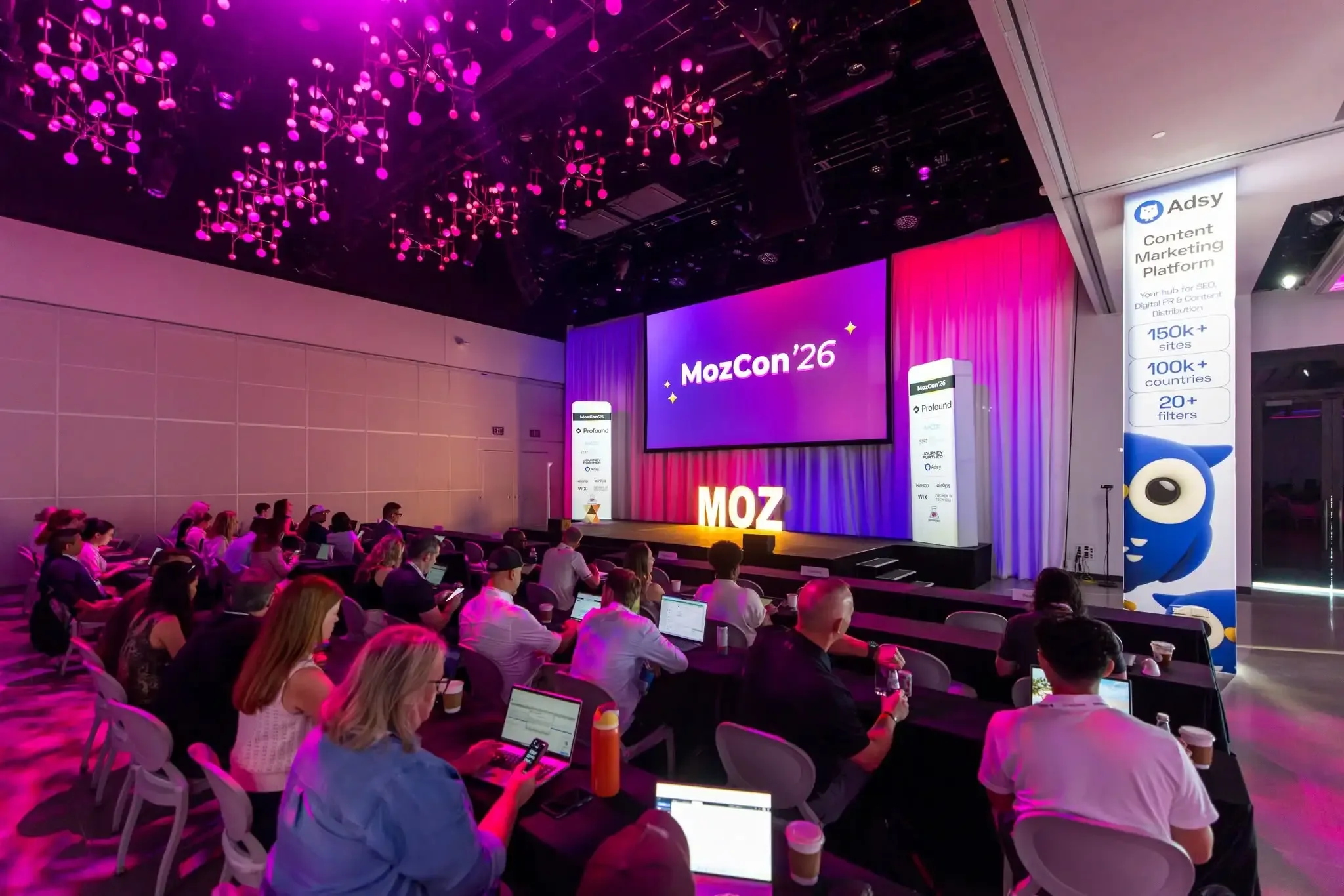
SEO has always been defined by change. Algorithms are updated, search results evolve, people declare SEO dead, and marketers adjust. After 13 years in the industry, I've seen this cycle repeat countless times. Each shift has ultimately made SEO more sophisticated, more strategic, and more valuable to businesses.
MozCon 2026 reinforced that the rise of AI assistants and autonomous search agents represents the industry's biggest transformation yet. Throughout the conference, one theme emerged again and again: search is no longer confined to a traditional results page. Discovery is happening across AI assistants, conversational experiences, and automated platforms, expanding how and where people encounter brands long before they visit a website.
While the channels may be changing, the role of SEO remains the same: understand how people discover information and help brands earn visibility where it matters. Here are three of my biggest takeaways from MozCon 2026, along with practical strategies for preparing your SEO program for what's next:
From Site Rankings to Machine Presence: Website traffic is no longer the only measure of success. Websites are increasingly serving as structured knowledge sources that power AI systems and autonomous agents.
From Clicks to Ecosystem Visibility: As traditional organic listings move farther down the page, visibility within AI-generated answers and trusted third-party sources has become a critical driver of brand awareness.
From Generic Content to Revenue Impact: Surface-level, AI-generated content rarely creates lasting business value. The strongest content strategies are built around original insights, firsthand expertise, and solving high-intent customer problems.
Takeaway 1: The Shift From Website Rankings to Machine-Readable Brand Presence
AI-First Discovery: Search engines and AI assistants increasingly synthesize answers directly, changing how people discover and interact with brands.
Websites as Knowledge Sources: Rather than serving only human visitors, websites are becoming structured sources of information that AI platforms use to understand and reference businesses.
Machine Readiness: Clear, well-structured data helps AI systems accurately interpret and represent your brand.
The era of the "10 blue links" has been fading for years, and MozCon 2026 made it clear that this transition is accelerating. Zero-click experiences are becoming standard user behavior as users ask questions across search engines and AI assistants, receiving answers without clicking through to a website.
At the same time, AI systems are changing how information is consumed. Search engines, chat interfaces, and AI assistants don't simply point users to content. They interpret it, synthesize it, and increasingly use it to generate answers or complete tasks. That means your website isn't just a destination for people anymore. It's also a source of information that machines rely on to understand your business, and the machines are quickly becoming the primary consumers of the web.
For SEO, this requires a broader definition of success. Website traffic and rankings remain important, but they are no longer the only indicators of visibility. The goal is to ensure your brand is accurately understood wherever AI systems retrieve information. That means continuing to invest in technical SEO and structured content while also strengthening your presence across trusted third-party sources, authoritative publications, and the broader web ecosystem that AI models reference.
Actionable Strategy: Build a Machine-Readable Website
To prepare for this shift, focus on making your website easy for both people and machines to understand. While content should always be written for humans first, your site's architecture should present information in a clear, structured, and consistent way that search engines and AI systems can interpret confidently.
That means using descriptive headings, semantic HTML, structured data, and consistent brand, product, and entity references throughout your site. The more clearly your content communicates who you are, what you do, and how your products or services relate to one another, the easier it becomes for AI systems to accurately represent your business.
For organizations with transactional experiences, it's also worth evaluating how emerging AI agents will interact with your website. Accessible interfaces, standardized data formats, and well-documented APIs can make it easier for autonomous tools to retrieve information or complete actions such as checking inventory, scheduling appointments, or submitting forms. While many of these capabilities are still developing, building a clean, machine-readable foundation today positions your site to adapt as AI-driven experiences continue to mature.
Takeaway 2: From Clicks to Ecosystem-Wide Visibility
The "Billboard" Effect: As organic listings are pushed further down the page, appearing within AI-generated answers builds awareness even when users don’t visit your website.
Off-Site Signal Power: Over 80% of AI citations come from trusted third-party sources to validate information, making earned media, reviews, and industry publications increasingly important for brand visibility.
Unified Messaging: Consistent positioning across PR, social media, industry publications, and owned content helps AI systems accurately understand and represent your brand.
For years, SEO success has been measured by rankings, clicks, and website traffic. While those metrics remain important, they no longer tell the full story. As AI Overviews, paid search placements, shopping modules, videos, and other SERP features occupy more screen space, traditional organic listings are being pushed further below the fold and driving fewer clicks.
In many cases, top-of-funnel search is beginning to resemble traditional awareness channels. A prospect may first encounter your brand within an AI-generated response, remember it, and return later through a branded search or direct visit without ever clicking the original citation. As a result, visibility itself is becoming a key outcome, even when it doesn't generate an immediate website session.
This shift also changes where visibility is earned. According to Muck Rack's analysis of more than 25 million AI citations, approximately 84% of citations come from earned media and third-party sources rather than paid content, while brand-owned websites account for a much smaller share of references across many AI platforms. Although citation patterns differ by platform, the takeaway is consistent: building authority beyond your own website has become an important part of SEO. Achieving visibility today requires managing your brand's broader digital footprint and ensuring consistent messaging across PR, social media, industry publications, and owned content.
Actionable Strategy: Build Authority Beyond Your Website
Off-page signals have always been an important component of SEO. Today, they're equally important for AI visibility.
Digital PR is one of the most effective ways to earn the trusted third-party mentions that AI platforms frequently reference. Publishing proprietary research, unique customer insights, original data, and expert perspectives creates opportunities to earn coverage from authoritative publications that both people and AI systems recognize as credible sources.
Success also requires closer collaboration across SEO, PR, social media, and brand teams. Breaking down these silos helps ensure messaging is consistent wherever your business appears online while creating more opportunities to earn authoritative mentions. As AI search continues to mature, measuring AI visibility, brand sentiment, and share of voice alongside traditional SEO metrics will provide a more complete picture of how your brand is being discovered, referenced, and perceived.
Takeaway 3: From Generic Content to Human Expertise & Business Impact
The Limits of Commodity Content: Generic, AI-generated content no longer differentiates brands or drives strong business results.
Experience Creates Authority: The strongest content strategies are built on firsthand expertise, proprietary data, customer insights, and unique perspectives that competitors (and AI) can't easily replicate.
Measure Business Outcomes: The most valuable SEO programs are measured by qualified leads, pipeline growth, and revenue impact.
The web is saturated with generic content. As AI makes it easier than ever to produce surface-level articles, publishing another "What is X?" page is unlikely to build authority or create a competitive advantage. While this type of content may still generate impressions or rankings, it often contributes little to meaningful business growth.
Instead, content strategies should focus on answering the questions that only your organization is uniquely positioned to address. Firsthand experience, proprietary research, customer insights, original data, and practical expertise create the kind of value that AI cannot originate and that competitors cannot easily duplicate. These are the signals that build trust with both users and search engines while supporting stronger commercial outcomes.
Ultimately, SEO success should be measured by its contribution to the business. Rankings and traffic remain useful indicators, but qualified leads, pipeline influence, customer acquisition, and revenue provide a far more impactful picture of long-term performance.
Actionable Strategy: Build Original, Experience-Driven Assets AI Can’t Copy
Every piece of content should answer a simple question: What unique value does this provide that someone else or an AI assistant couldn't create from publicly available information?
Look for opportunities to transform internal expertise into original assets. Publish proprietary research, share customer success stories, analyze first-party data, document lessons learned, and build interactive resources such as calculators, templates, or assessment tools that help users solve real problems. These assets create value beyond basic informational content while earning the authority and citations that AI platforms increasingly rely on.
Finally, regularly audit your content library. Refresh, consolidate, or remove outdated and low-value pages, and prioritize investments in content that supports your audience throughout the buying journey and contributes to your business outcomes.
The Road Ahead for SEO
Once again, SEO isn’t dying. It’s expanding into every corner of the digital ecosystem.
As AI assistants, AI-powered search, and autonomous agents reshape how people discover information, our role as marketers is expanding beyond optimizing individual pages for individual keywords. Success increasingly depends on ensuring our brands are understood, trusted, and discoverable wherever people(and AI systems) seek answers.
That means building websites that communicate clearly with both humans and machines, earning authority beyond our own domains through trusted third-party sources, and creating original content rooted in firsthand expertise and real customer value.
The fundamentals of SEO haven't disappeared. People are still searching for answers, evaluating businesses, and making purchasing decisions. What's changing is how those answers are delivered and where those decisions begin. The marketers who embrace that shift won't just keep pace with the future of search; they'll help define it.
Looking for a partner that connects SEO to business outcomes? We help organizations build search strategies that increase visibility across search and AI platforms while driving qualified leads, pipeline, and revenue. Contact us today for your free consultation.