
Looking for more information on how and why to track your brand’s AI visibility, but unsure where to start? Or maybe you’re still evaluating whether monitoring visibility in AI is worth incorporating into your marketing strategy. While the percentage of potential customers using solely LLMs is still relatively small, it’s already shaping how people research and validate brands.
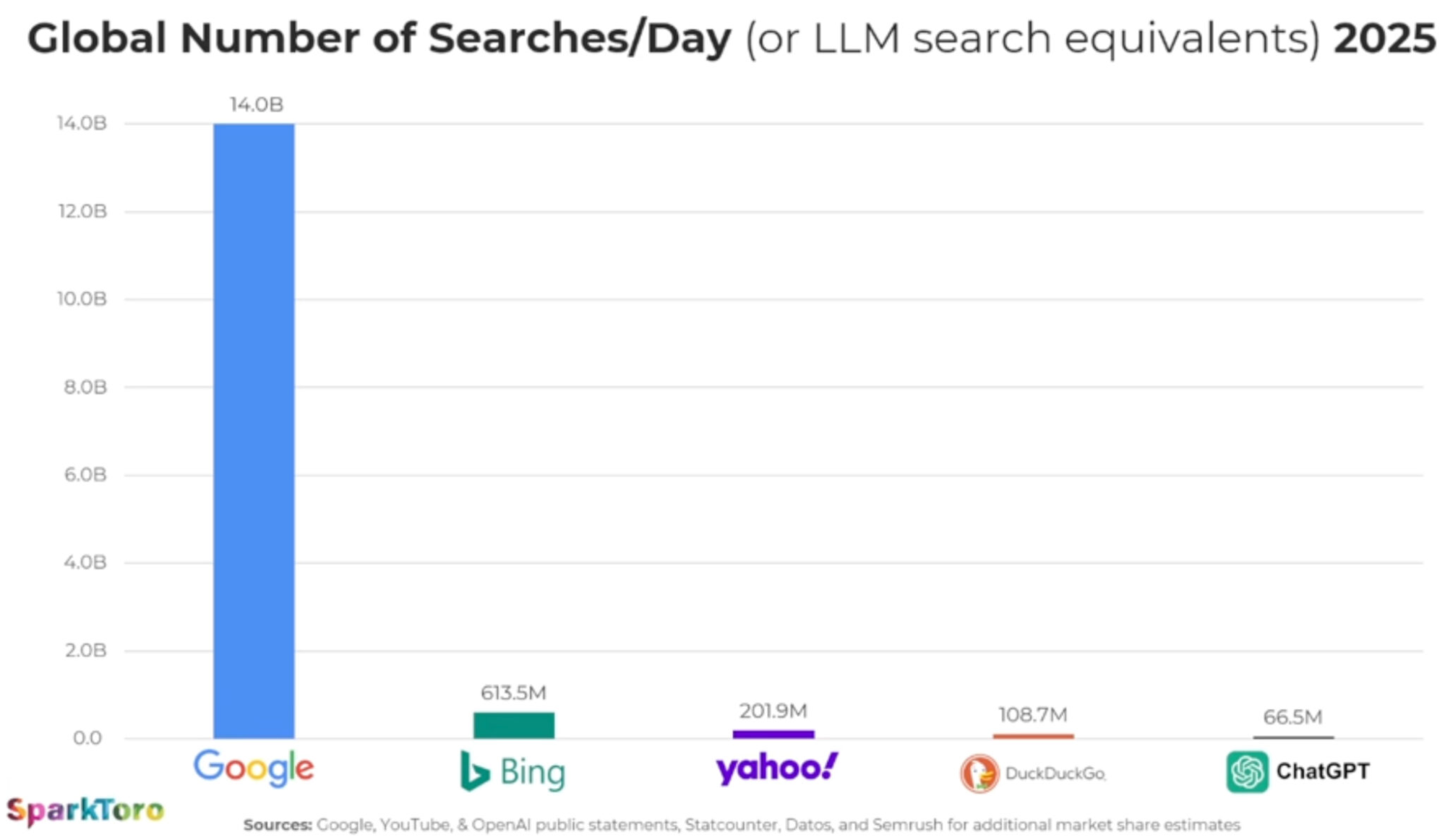
To put this into perspective, a September 2025 Search Engine Land article stated that ChatGPT processes an estimated 66.5 million “search-equivalent” prompts per day, compared with Google’s roughly 14 billion searches per day, making Google still 210x larger in daily search volume. Even though LLM-driven searches represent a much smaller share, they are growing rapidly and influencing how users discover, compare, and interact with brands.
This is why understanding how your business is being displayed across AI assistants and AI Overviews is becoming so important. Reviewing your share of voice, competitor presence, and industry trends across LLM platforms gives you strategic insight that can quickly become a competitive advantage. In this blog post, I’ll walk you through what LLM visibility actually is, why it matters, and how you can use Semrush to strengthen your brand’s presence in the age of Artificial Intelligence (AI).
What is LLM visibility?
LLM visibility refers to how your brand appears, is interpreted, and is represented across large language model (LLM) platforms, including ChatGPT, Gemini, Claude, Perplexity, and other AI assistants that surface answers directly to users.
It’s similar to traditional organic search visibility, but with one major difference: LLMs don’t simply rank pages; they synthesize information.
Instead of pulling from keyword signals and link structures the way Google Search does, LLMs rely on:
Citations and references: directly or indirectly sourced
Contextual understanding of your brand and content
Topical authority across multiple pieces of content
Consistency of your brand presence across the internet
Freshness, clarity, and reliability of available information
In other words, LLM visibility is not just whether you show up; it’s how these models describe you when you do. Are you positioned as a leader? A relevant option? An afterthought? Or not mentioned at all?
Because users increasingly treat LLM responses as trusted summaries, this type of visibility directly influences how people perceive your brand before they ever visit your website. And in many cases, before they even consider alternative solutions. A recent survey from Search Engine Land found that nearly 90% of businesses fear losing organic search visibility as AI has reshaped how users are searching.
This shift makes monitoring LLM visibility just as important as monitoring traditional keyword rankings and organic traffic driven to your website.
Why is Monitoring LLM Visibility Important?
AI’s evolution over the last couple of years has fundamentally changed the way users research, compare, and make decisions. With the introduction of AI Overviews on Google and the increasing reliance on conversational assistants like ChatGPT, we’ve entered what many now call the “zero-click era.”
Users are getting the information they need directly from AI-generated summaries, and often never clicking through to the original website. Though watch out. Sometimes, AI can get it wrong. In most cases, it’s very, very obvious.
This shift has several major implications for brands:
- Brand visibility (not rankings) is becoming the most important SEO Metric.
Even if your website doesn’t appear in the top 10 organic search results, LLMs may still reference your brand, cite your content, or position you as a recommended solution. The inverse is also true: You can rank well traditionally but fail to appear in AI Overviews or LLM outputs, causing you to lose visibility where consumers are increasingly getting their answers. - Your competitors may already be winning in AI-generated environments.
LLMs frequently surface brands that demonstrate topical depth, clear positioning, and consistent credibility across the web... all elements that may bypass traditional SEO rankings.
Monitoring visibility helps you uncover:- What concepts or queries are competitors winning
- Where they’re outperforming your content
- Which topics do LLMs associate with their brand vs. yours
- LLM Summaries heavily influence buying decisions.
AI-generated responses often highlight:- Top products (for example, Shopping on ChatGPT, which was launched in 2025)
- Best solutions
- Recommended brands
- Pros and cons
- Feature comparisons
- Proactive monitoring helps you understand how your brand is framed.
LLMs don’t just list companies—they describe them. Monitoring visibility enables you to evaluate:- Whether your position is accurate
- Whether your messaging aligns with how you want to be perceived
- Whether LLMs are missing important details
- Whether outdated or incorrect information is being repeated
- Tracking visibility allows you to close content gaps early.
LLM output reflects the strongest, clearest, and most consistent information available online. If you’re missing content in key areas on your website, LLMs will deprioritize your brand in the results.
Monitoring these gaps helps you:- Identify missing or weak pages
- Strengthen topical relevance
- Improve your authority in AI outputs
- Support future content creation and optimization
Monitoring visibility has quickly become an important part of your analytics and search strategy to better understand where your brand stands in the AI-driven results.
How to Audit Your LLM Visibility Using Semrush
Once you understand what LLM visibility is and why it matters, the next step is learning how to actually measure it. Semrush’s AI Visibility Toolkit provides a structured way to evaluate how your brand is appearing across AI assistants, identify gaps, and build a strategy that strengthens your presence in the generative search space.
Here is a step-by-step approach to auditing your brand’s visibility using Semrush:
Start With an LLM Visibility Assessment
Begin by reviewing where and how your brand appears across AI-generated results. Semrush’s AI Toolkit helps answer foundational questions like:- What content is performing well?
- Where is your website being mentioned?
- How is your brand being described in AI outputs?
- What are your competitors visible for?
- Where are competitors outperforming you?
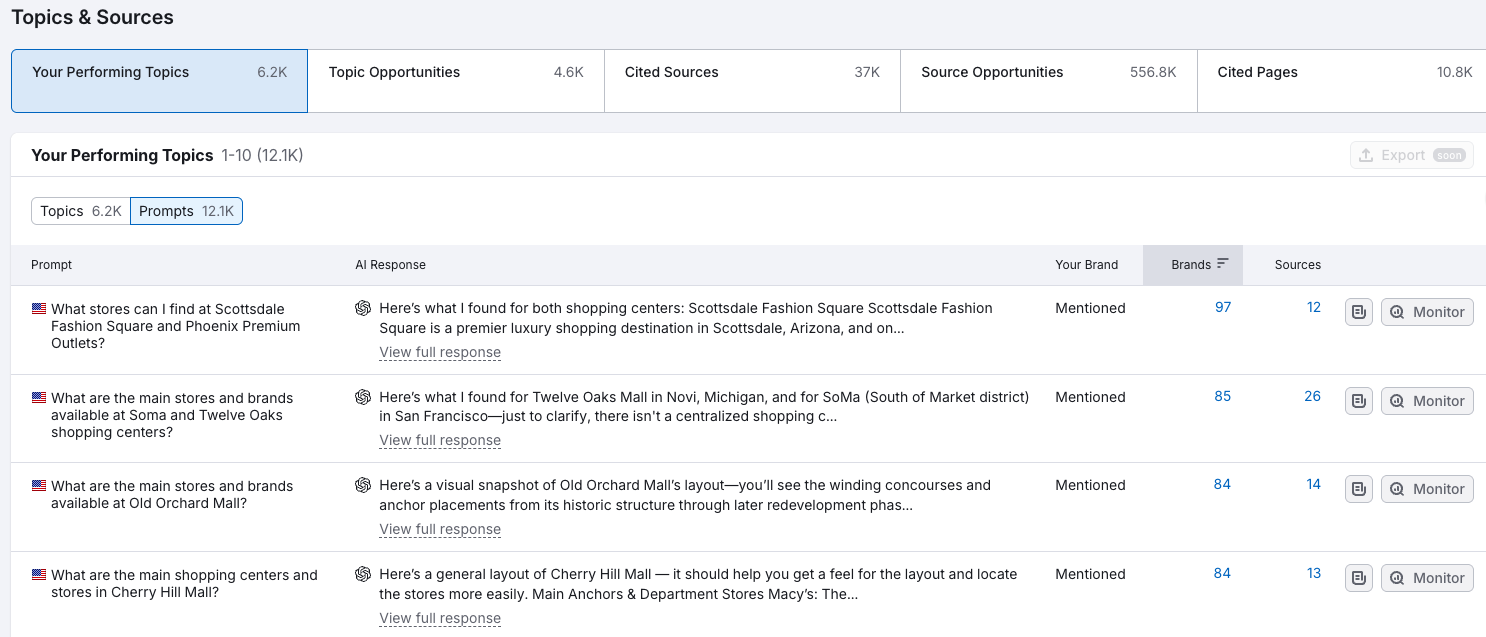
Excerpt from Semrush’s “Topics & Sources” report in the AI Visibility Toolkit This initial assessment provides a high-level understanding of your position in the AI ecosystem and highlights areas that require deeper analysis.
Identify Top-Performing Content
Next, review the pages or topics that currently drive the strongest visibility signals. Look for patterns in:- Content structure and formatting
- The stage of the user journey they target
- Publication dates
- Whether they were repurposed or shared across other channels
- Whether they’re evergreen, seasonal, or out of date
Top-performing content often indicates what LLMs already trust, and provides clues for creating new content that can replicate that success.
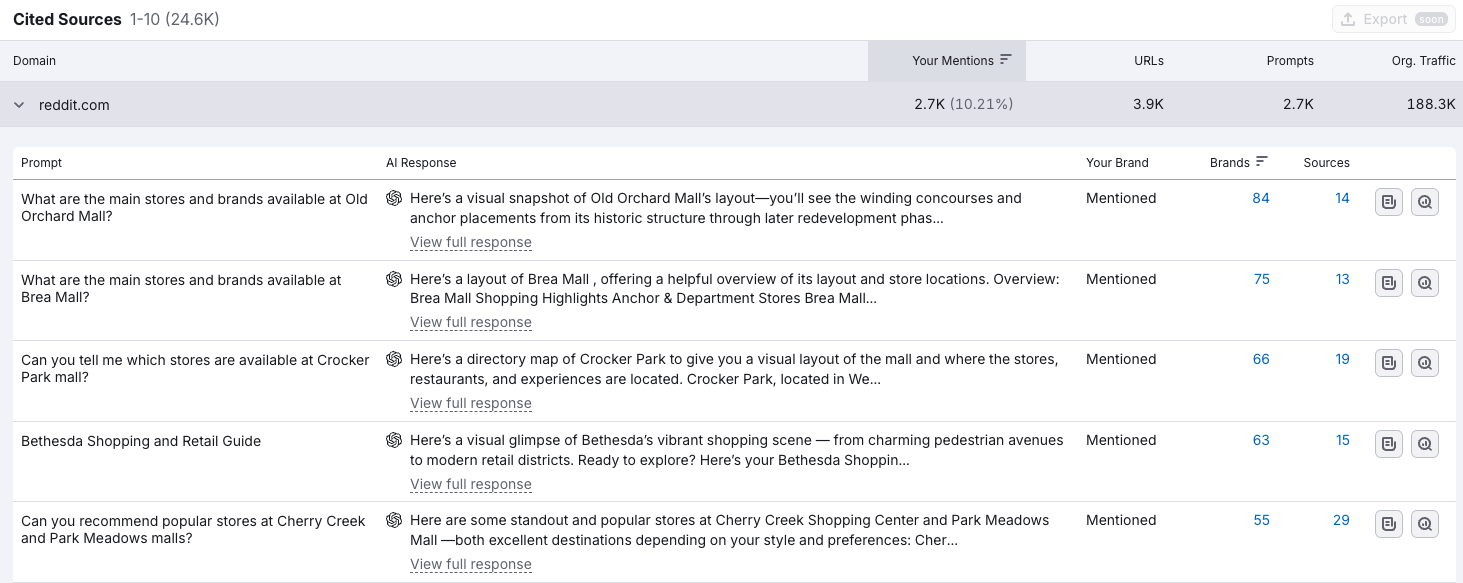
Excerpt from Semrush’s “Cited Sources” report in the AI Visibility Toolkit Analyze Changing User Search Trends
Semrush’s keyword research capabilities combined with its AI visibility tools make it easier to spot rising user queries, shifting behavior, and emerging AI-related terms. These insights help you:- Refresh underperforming content
- Prioritize new high-impact content
- Adapt your strategy to user intent in conversational and generative search
This is especially important as LLM usage grows and the way users phrase questions continues to change over time.
Conduct a Content Gap Analysis
LLMs reward comprehensive, trustworthy, and context-rich content. By comparing your brand’s visibility and coverage to competitors, you can uncover:- Topics you haven’t covered deeply enough
- Opportunities to build authority
- Missing content formats LLMs favor
- Areas where your brand is overlooked or undervalued
Filling these gaps helps strengthen your visibility across both search engines and AI assistants.
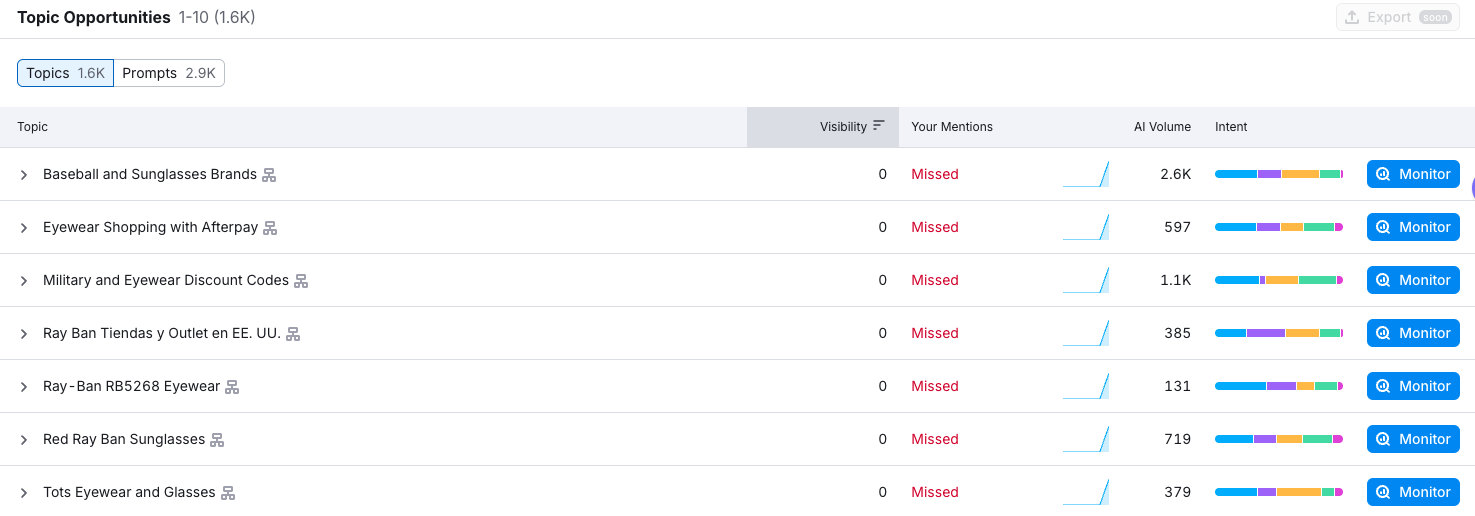
Excerpt from “Topic Opportunities” section of Semrush’s AI Toolkit Explore Share of Voice & Competitor Insights
Competitive analysis is important for understanding why other brands may be appearing more prominently in LLM outputs. Semrush’s AI Toolkit helps identify:- The topics competitors dominate
- High-visibility content formats they use
- Where they’re earning citations
- How do they position themselves within AI-generated summaries
These insights allow you to proactively grow your market share by answering questions other brands aren’t.
Translate Finding Into a Unified Content Strategy
Finally, use everything you’ve found to build or refine your content roadmap. Semrush’s AI Toolkit supports strategy across:- Content optimization
- Keyword research
- Target audience assessment
- Competitor insights
This ensures your content strategy isn’t just reactive, but intentionally aligned to how real users (and LLMs) interpret your brand.
Auditing your brand’s LLM visibility isn’t about just understanding where you stand today; it’s also about preparing for the future of search. By leveraging Semrush’s AI Visibility Toolkit, you can identify opportunities early, strengthen your authority, and ensure your brand stays visible within your market.
Ready to Be Seen In LLMs and AI-Models Alike?
AI-driven search isn’t going to slow down (you likely saw how quickly it took off!), and brands that adapt will win the biggest share of voice. If you’re ready to strengthen your LLM visibility, enhance your content strategy, or beat your competitors in the AI space, we’re here to help!
Let’s connect. Reach out to see how we can get you visible in the space through a well-constructed content strategy and roadmap.
Prefer to just stay in the know? We also publish a bi-weekly newsletter, where we share insights like these along with timely digital marketing trends to help you stay ahead.