
Over the past year, one theme has come up in almost every client conversation: “We need to understand how marketing is actually driving revenue.”
Leads aren’t enough anymore. Leadership teams want clarity, and they want it across the entire customer journey… not just the part marketing controls. So we made it a priority to deepen our lead-to-sale mapping process, helping clients connect the dots between marketing channels, CRMs, sales teams, and ultimately, revenue.
What we’ve learned along the way is that this work is part detective investigation, part data audit, and part strategic alignment. And when it’s done right, it fuels insights most brands have never truly had visibility into.
Video: Improved Lead Quality and ROI from Lead to Sale Mapping
What is Our Lead-to-Sale Mapping Process?
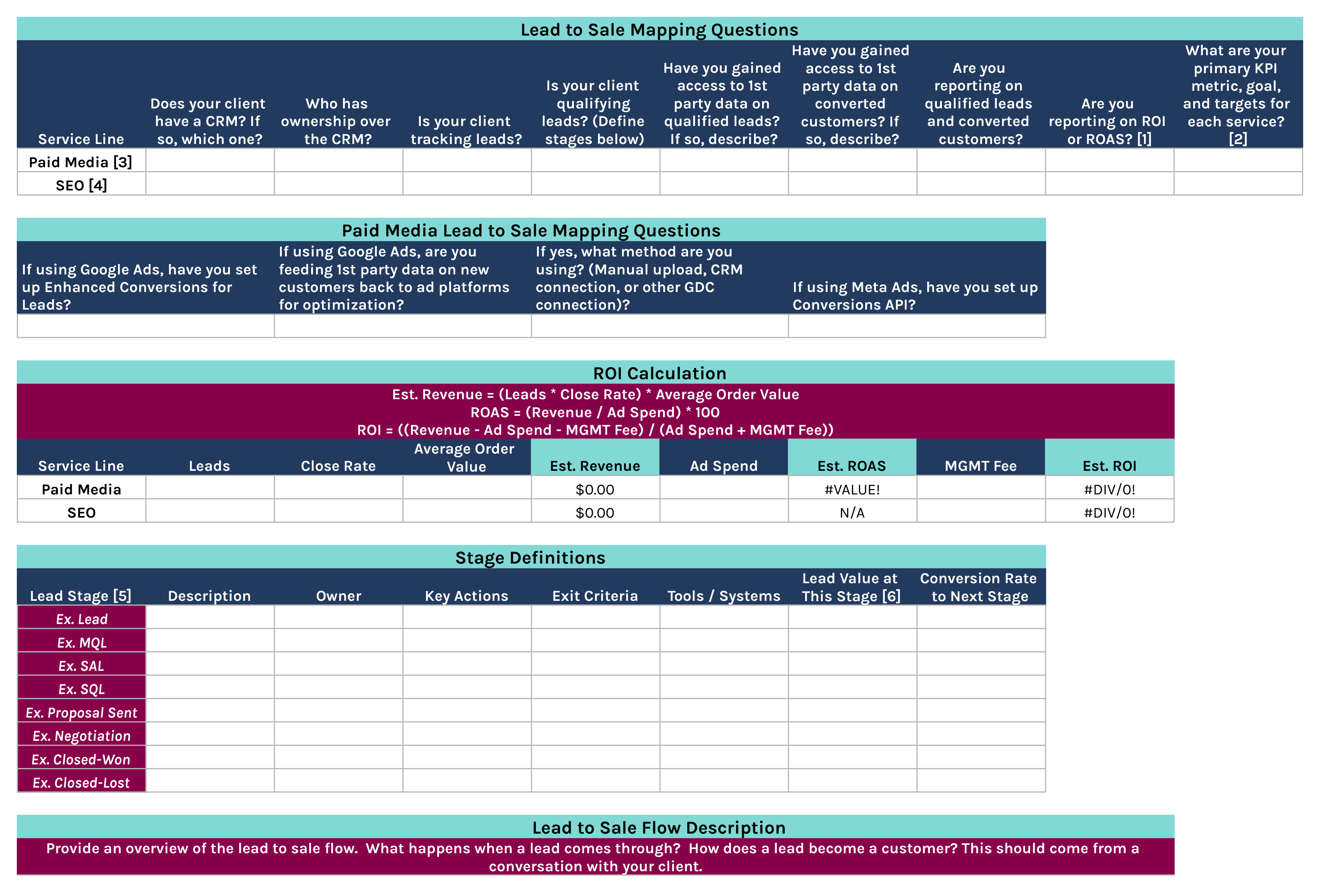
Lead-to-sale mapping is the process of tracking every step a prospective customer takes from the moment they engage with your marketing, whether that’s a click, form fill, or phone call, all the way to closed revenue.
It’s about understanding now just how many leads are coming in, but what happens to them once they enter the sales system.
In practice, that means answering key questions:
Where did the lead originate? (e.g. search, social, organic, referral, etc.)
How does the lead move through your CRM?
Which sales stages does it hit, and where does it get stuck?
What percentage of leads are qualified and become real opportunities?
How much pipeline and closed revenue did marketing directly create?
Every company’s process looks a little different. Some are tightly integrated with Salesforce or Hubspot, others are managing sales in industry-specific platforms, and some are literally tracking deals in spreadsheets. But the goal is the same: create a clear, accurate picture of how marketing contributes to pipeline, opportunity value, and revenue.
When we do lead-to-sale mapping, we’re essentially stitching together marketing data, sales behavior, and CRM visibility into one coherent story. And in almost every case, that story reveals insights that help marketers improve their ROI.
Why Lead-to-Sale Mapping Matters
Our job as digital marketers isn’t just to generate leads, but to help drive sales and revenue. But you can’t improve what you can’t see, and for most organizations, the gap between a lead entering the system and a deal closing is where visibility can break down.
Different teams own different pieces of the customer journey. Marketing passes a lead to sales. The sales team qualifies it. RevOps tracks it. Somewhere in between, data gets lost, attribution gets fuzzy, and no one has a full picture of what’s actually converting or why.
That’s the blind spot lead-to-sale mapping solves.
When we work with clients to understand the “click to close” journey, it changes everything:
We can see which leads are genuinely high quality.
We can identify which channels and campaigns are driving real pipeline value.
We can pinpoint friction points that slow down or stall deals.
And we can finally connect marketing activity to metrics that matter to the business.
Most importantly, this work opens up better conversations, internally and with our clients. Instead of marketing and sales operating in silos or pointing fingers over lead quality, both teams start operating from the same source of truth. That alignment is where smarter decisions, better spend efficiency, and stronger results come from.
Lead-to-sale mapping isn’t just about attribution. It’s about understanding how the entire business works, so marketing can play a more strategic, revenue-driving role.
Common Challenges We Run Into With ROI Reporting
One of the first things we learned is that no two clients look the same once you get inside their systems. Every organization routes leads differently, scores opportunities differently, and uses a slightly different mix of platforms, tools, and workflows. That variability is part of the job, but it’s also one of the biggest challenges.
Here are the most common hurdles we run into:
- Fragmented Data Across Systems
Marketing may be tracking one set of metrics in GA4. Sales may be living in Salesforce or HubSpot. Operations may be in an industry-specific CRM, or in some cases, still in spreadsheets. Stitching those pieces together requires digging in to understand how the data flows, where it breaks, and what’s actually reliable. - Limited Access to What Happens After the Lead
It’s surprisingly common for marketers (and even our primary client contacts) to have little visibility into the sales process. Sometimes they simply don’t have permission; other times, the data isn’t being tracked well enough to share. Either way, we have to get creative and start with high-level conversations to build reasonable estimates until better data becomes available. - Inconsistent (or Nonexistent) Definitions
“Lead,” “qualified,” “opportunity,” and even “conversion” can mean very different things across teams. Before we can map anything, we often have to align everyone on what these terms actually mean. That alignment alone can uncover insights that have been hiding in plain sight. - The Human Element
Technical challenges are usually solvable. The harder part is the people side. Different departments have different priorities, comfort levels with transparency, and ways of working. Part of our role is helping teams communicate more openly so the data can flow and so everyone can use it. - Every Client Requires a Blank Slate
There’s no one-size-fits-all solution. We start fresh every time, asking progressively deeper questions to understand what’s happening at each step. That manual investigation takes time, but it’s the only way to get an accurate picture of the journey and find the high-value insights.
The Benefits of Getting Lead-to-Sale Mapping Right
The impact for clients is immediate once we have a clear picture of what’s happening between a click and a closed deal. In addition to better reporting, we can reshape how organizations make decisions, allocate budget, and work together.
Below are the biggest benefits we have found:
Shared clarity across teams: Marketing, sales, and operations finally have a unified view of what’s working and why, making conversations and decisions easier.
Better insights into what drives revenue: Instead of focusing solely on lead volume, our clients can see which channels and campaigns generate the most opportunities and closed-won deals, getting us closer to a true ROI model.
Faster, more efficient sales processes: The mapping often exposes bottlenecks (slow follow-ups, misaligned scoring, CRM gaps) that, once fixed, improve closed rates and shorten the sales cycle.
A stronger foundation for KPIs and forecasting: Clearer data means more accurate revenue targets, better projections, and KPIs tied to outcomes that leadership will care about.
In short: when the full customer journey becomes visible, marketing becomes far more effective… and more valuable.
Where to Go From Here
If there’s one thing this work has reinforced, it’s that lead-to-sale mapping is the foundation for more effective marketing and communication with clients. In an environment where every dollar is scrutinized and efficiency matters more than ever, teams need a clear, honest view of how their efforts translate into revenue.
This process takes time. It takes collaboration. And in many cases, it takes asking tough questions about data, systems, and internal workflows. But the payoff is undeniable. Client conversations become easier, alignment improves, and the level of transparency between our team and theirs becomes significantly stronger.
If your team hasn’t mapped the journey yet, start small. Sit down and walk through what happens after someone fills out a form or picks up the phone. Ask where the data goes. Ask what’s being tracked.
And if you’re ready for deeper visibility, alignment, and revenue impact, this is exactly the kind of work we love digging into. Reach out anytime! We’re happy to help you get started.