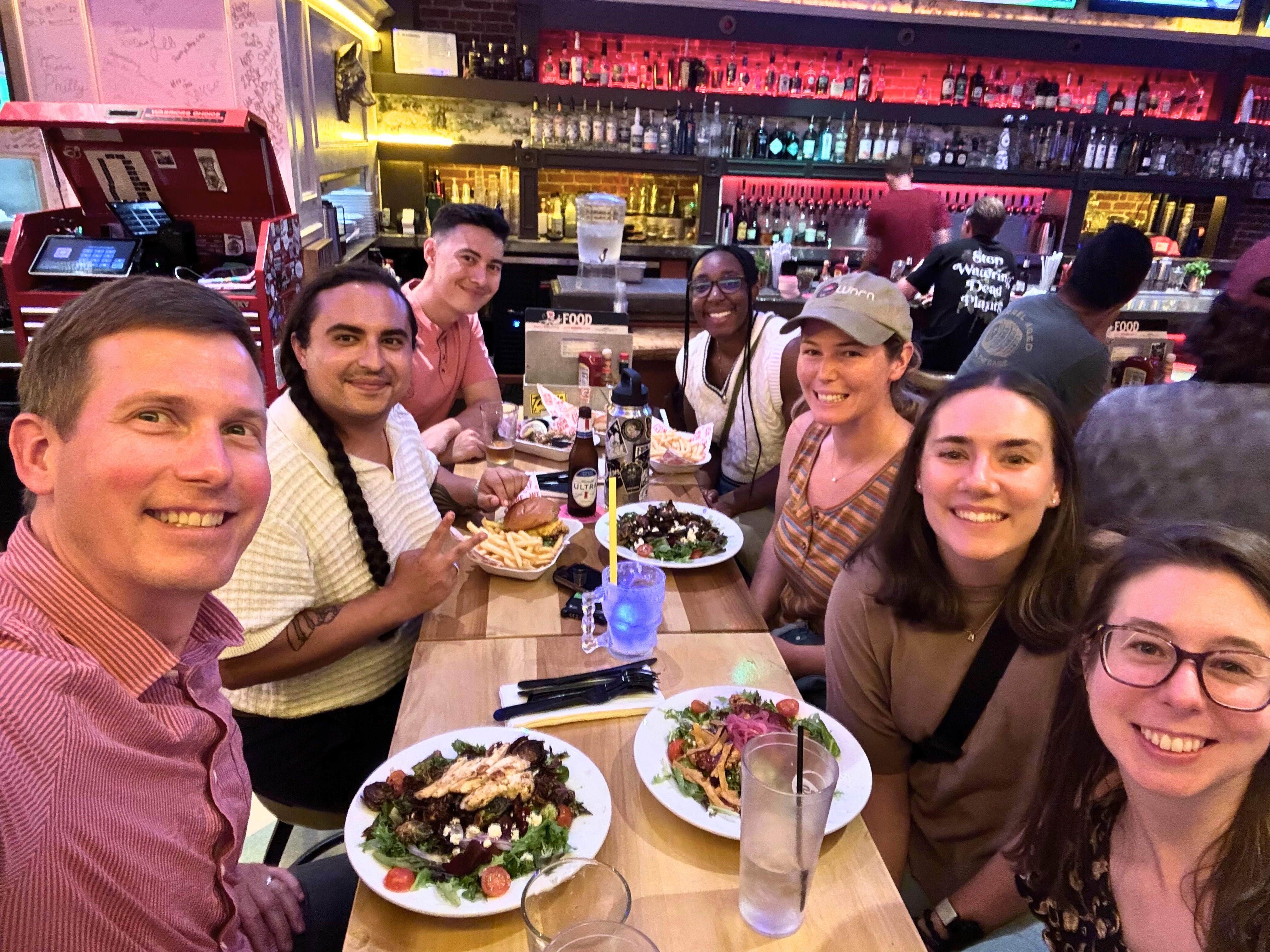
HeroConf San Diego 2025 brought together an incredible lineup of speakers from across the digital marketing industry, each offering fresh insights, practical takeaways, and ideas about the future of paid media. It was a great opportunity to pick up new tips, find new experiments worth testing, and hear first-hand how the rise and power of AI is transforming the paid media landscape for companies of all shapes and sizes.
While it’s clear that traditional paid media tactics and channels aren’t necessarily going away, the digital advertising industry is slowly adapting. If you’re not keeping up, you and your clients risk falling behind the curve.
Three main themes stood out across nearly every presentation:
AI Use in Advertising: We all knew this was coming. No further comment needed. :)
Vibe-Coding: Never heard of it? You’re not alone. It was my first time too. Chances are, you’re already doing it without realizing it. (And if not, keep reading to learn how to make it work for you.)
New Ad Formats & Channels: We are all familiar with how much Google and Meta (Facebook and Instagram) have been changing over the past year – Performance Max, flexible formats…you name it. But new platforms and formats are emerging that deserve our attention as well.
In this post, I’ll share some key takeaways from my favorite discussions and how I’m applying these ideas to uncover new insights and opportunities for my clients.
Erica’s Top 3 Takeaways
LLMs (Large Language Models) Can Turn Everyday Tasks Into Robust Models
The best part? You can do this without any technical coding knowledge!
How often are you really using ChatGPT or Gemini? Chances are, you could be using them more (myself included). Before these robust LLMs, marketers relied on ad scripts, which are bits of code that tell Google Ads to perform certain actions, like pausing a campaign once it hits a budget cap.
Those are still useful (we use them ourselves), but today’s technology can take this one step further. Let’s be honest — we’re marketers, not developers. We know what strategies work and what outcomes we want, but we don’t necessarily know how to code them.
That’s where LLMs can shine — they bridge the gap between marketers and engineers. Cue: vibe-coding: instead of writing lines of code, you describe what you want software to do and let AI handle the technical heavy lifting.
What does this look like? Well, the world is your oyster.
At HeroConf, speakers shared creative examples of vibe-coding in action — from seasonality analysis tools to panels of AI “critic personas” that review and optimize blog content. The key is to start small: begin with basic data analysis, then add layers of functionality to enhance your output. The possibilities are endless.
Paid Advertising Is Bigger Than the Phone or Laptop Screen
And it probably should be.
New ad formats are dropping constantly across Microsoft Search (Bing), Google, and Meta. But what about platforms that aren’t in your current marketing mix? CTV/OTT, OOH/DOOH, and Digital Audio are growing faster than paid social.
While users may scroll past another in-feed ad, CTV advertising commands full-screen, unskippable attention on the largest screen in the home. Now’s the time to expand beyond Search and Social. Explore emerging channels where your audience is already paying attention.
Paid Strategies Are Rooted in SEO Signals
There’s a reason most agencies have both Paid and SEO divisions and why they often work best when aligned.
When comparing paid search to Search Engine Optimization (SEO), the two have more in common than we typically acknowledge. For example, how many of you use separate paid-only landing pages? That’s not a bad approach (I’m a fan, personally), but what if we borrowed a few tactics from SEO?
Your paid landing pages should at least align with what’s working well organically, and can maybe even serve as a streamlined version of that high-performing content. There’s a reason it works.
Outside of landing page relevancy, visibility gap analyses, and competitive review mining, both “organic” methods that can yield valuable insights for your paid media strategy.
The Big Picture
The paid media environment is shifting fast. Keep up with the changes by experimenting with AI and LLMs, testing new ad formats and channels, and leveraging organic insights to strengthen your paid media efforts and better align more closely with SEO.
Where To Start: An AI Example
Now that you know where the industry is heading, you’re probably wondering, “How do I start taking action?” Great question! I don’t have all the answers, but I do have some experience navigating this changing advertising landscape.
One of my recent projects involved creating a custom GPT within ChatGPT that connects two of the main takeaways I shared above: vibe-coding and SEO analyses. I essentially asked ChatGPT to conduct a deep dive version of a competitor analysis.
I wanted to go beyond looking at what ads competitors are running in transparency centers (though, I do love a good snoop…). I wanted to understand their strengths, weaknesses, opportunities, and threats. What kind of messaging do they use on their websites? What are their customers saying about them in online reviews and forums? In short, I wanted to know it all. And while I could spend hours scrolling Reddit, ChatGPT can handle that research in minutes.
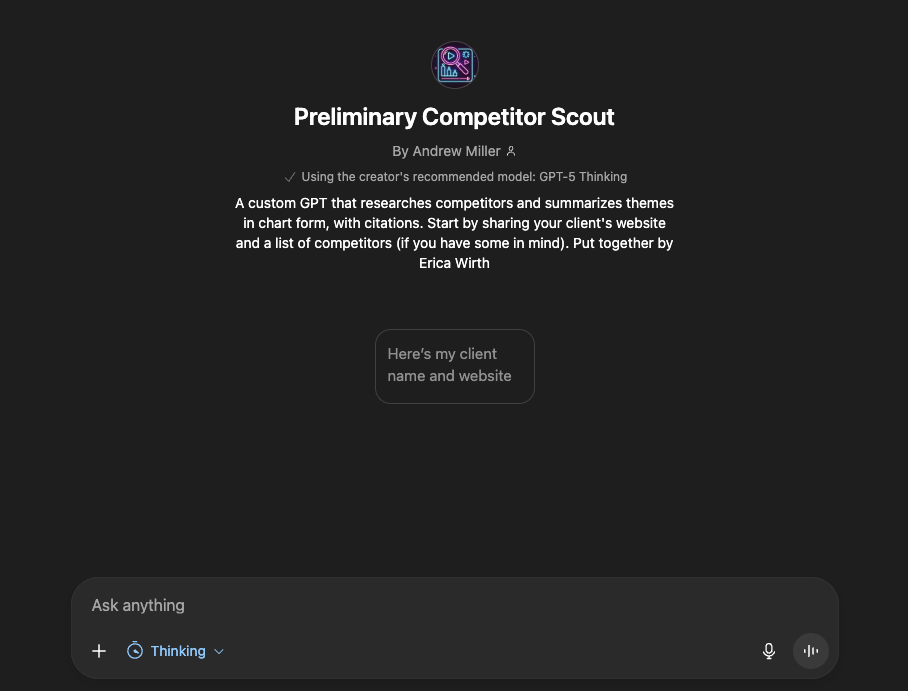
It took several iterations and very specific prompts to get the right output, but the results were astonishing. In less than 3 minutes in ChatGPT 5—using ChatGPT's advanced “Thinking mode”—I generated:
SWOT analyses for multiple competitors
Examples of their brand messaging
Common themes from customer reviews and feedback
Insights into my clients’ current positioning
Strategic suggestions for closing the gaps in the competitive market
And even example ad copy based on the findings
Now this is what a meaningful competitor analysis looks like. It shouldn’t end with seeing what ads your competitors are running or how much they’re spending… that’s where it should begin:
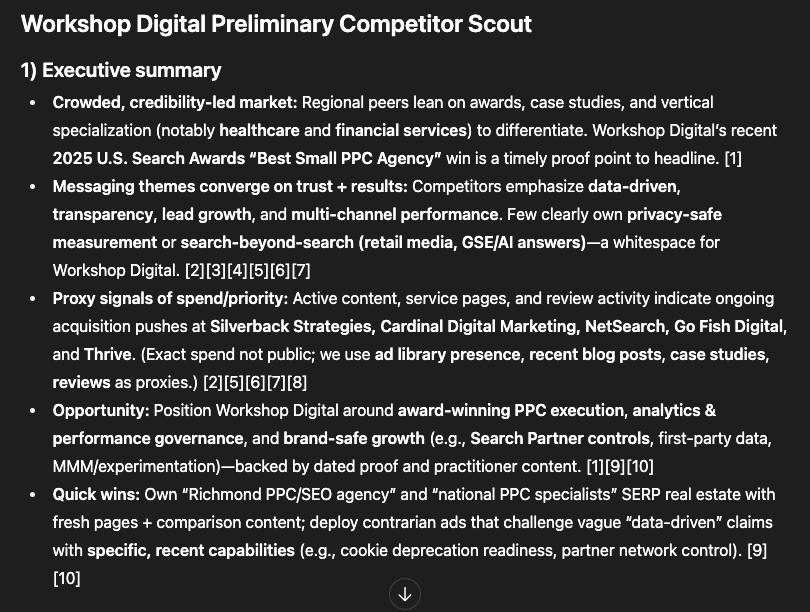
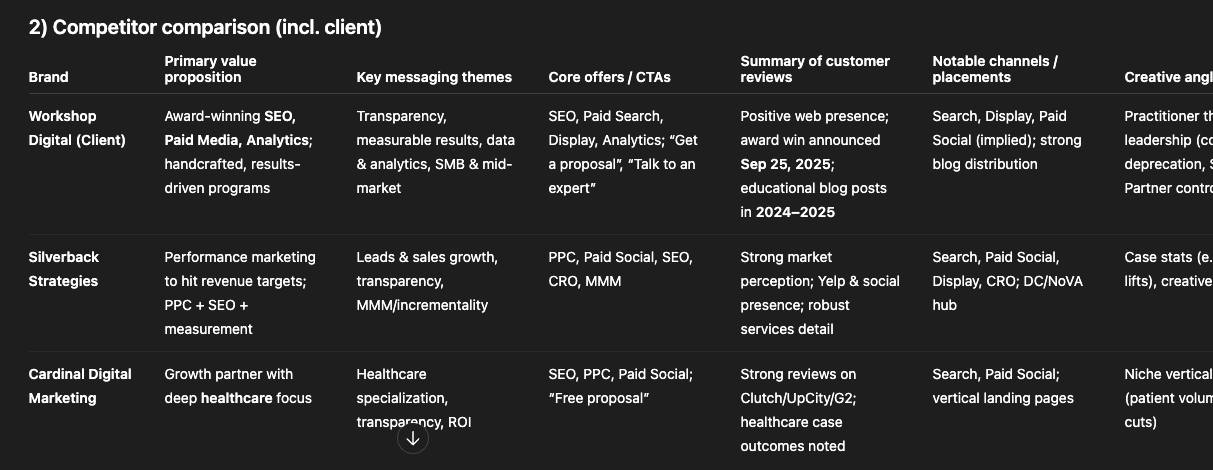
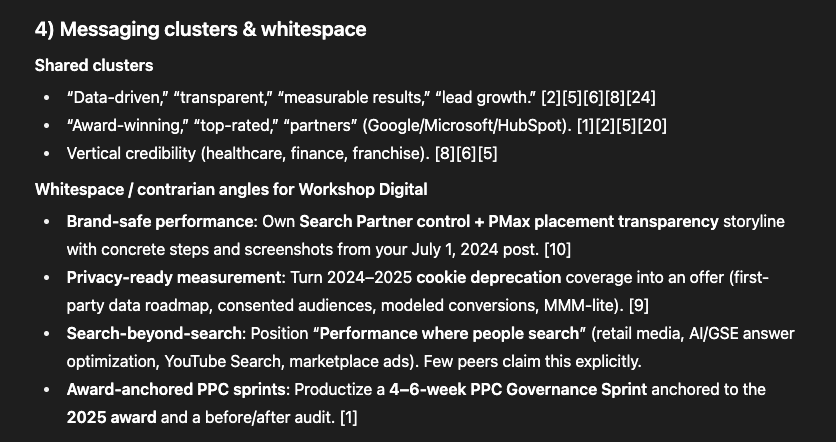
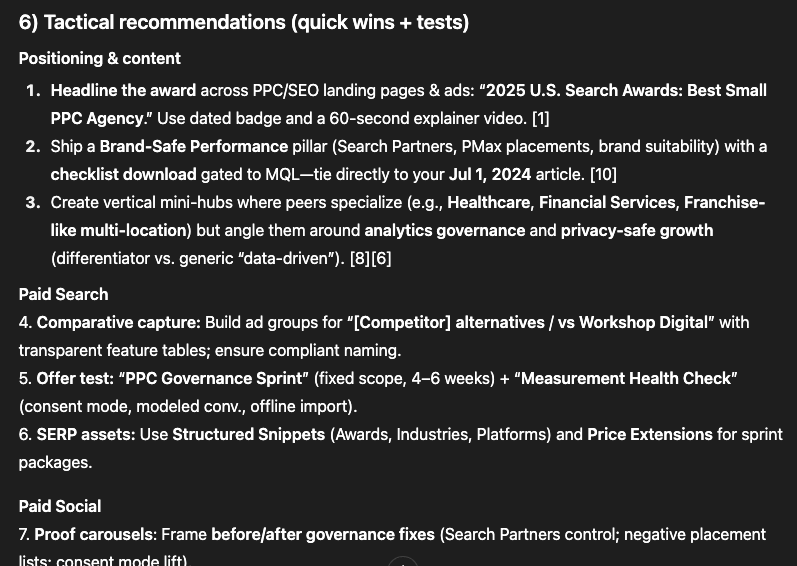
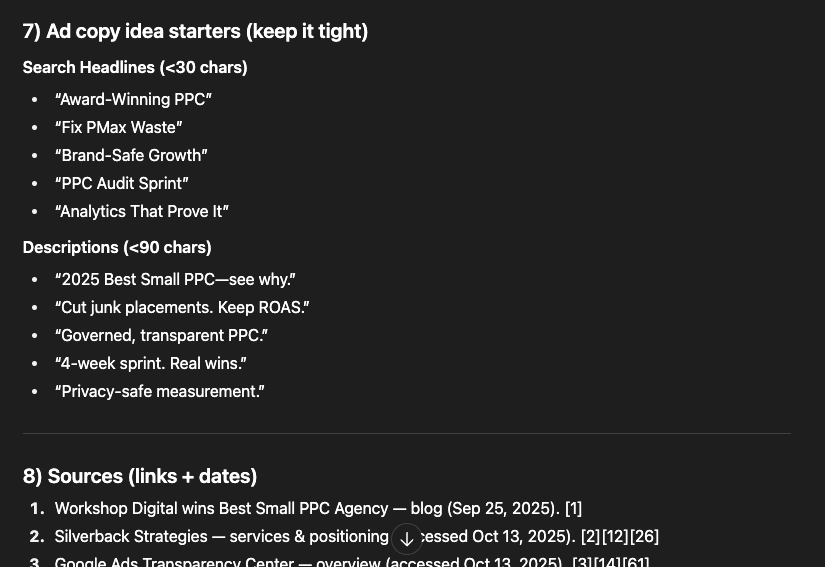
A Custom GPT made all of this possible, and I have to admit: vibe-coding was pretty fun. What used to take hours for one client can now be repeated for any client in a matter of minutes. It all started with a routine task and analysis that we do regularly.
When trying something similar, start small. Experiment, refine, and build from there. Because in this new marketing environment, the sky’s the limit… and the (AI) world is truly your oyster.
Looking Ahead: Better Insights & Analysis Drive Stronger Results
HeroConf 2025 reinforced that there’s no single path to success, but the best ones involve diversifying and experimentation.
In today’s digital world (one that’s arguably overfilled with stimulation and ad presence), we need to find ways to stand out and think outside of the box.
What better way to start than by utilizing AI for what it’s good at: deep analyses that will provide smarter insights. How you take those insights and transform them into actionable success for your clients is where the real fun (and impact) begins.
To explore how these strategies can be applied to your organization and take advantage of AI-driven paid media efforts, get in touch with us for a free consultation.