
Traffic from large language models (LLMs) is becoming an increasingly visible part of website analytics. Platforms like ChatGPT are now sending users directly to websites, adding a new layer to how people discover information online. While this traffic is still smaller in volume than traditional organic search (specifically Google), it is closely connected to it.
What is emerging from early reporting is a clear pattern. The pages that attract traffic from LLMs often match the pages that perform well in search. This suggests that user intent remains largely consistent across both platforms. Even as discovery methods change, users are still searching for the same information, and the content that serves those needs continues to rise.
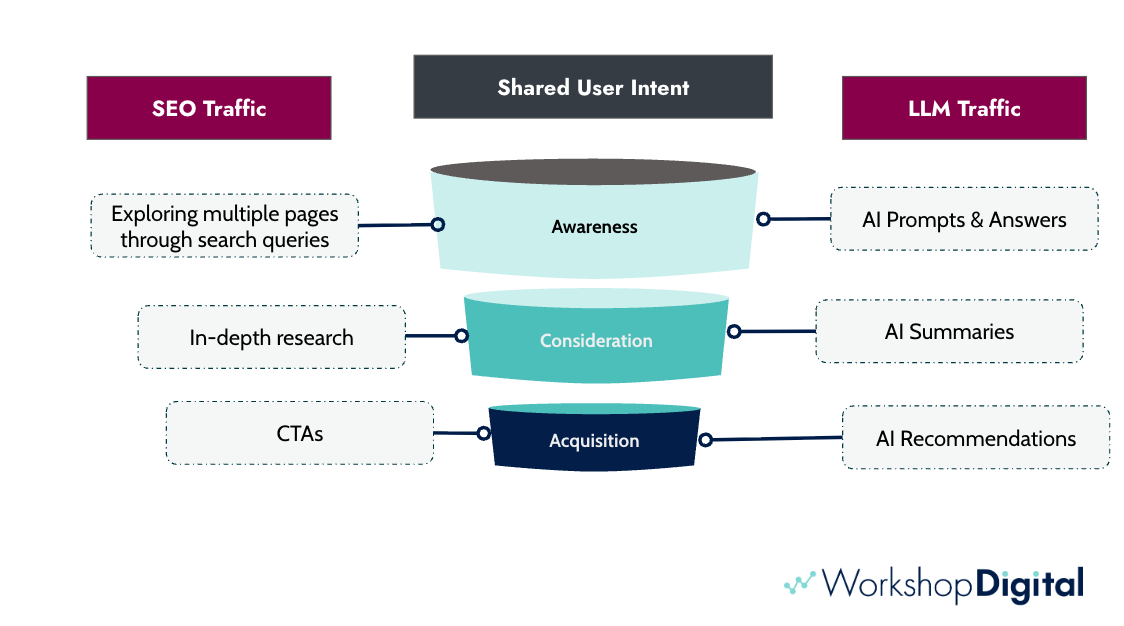
While organic search and LLM platforms deliver traffic in different ways, they often serve users at the same stages of intent. The diagram below illustrates how both channels map to the same awareness, consideration, and acquisition funnel, despite differences in how users interact with them.
Why LLM Traffic Is a Strong User Intent Signal
LLM referrals may not rival organic search in volume, but their value lies in what they reveal rather than how much traffic they drive. Each session represents a user who asked a specific question and was directed to a page that an AI model identified as relevant, clear, and trustworthy.
Because LLMs respond to direct prompts, this traffic often reflects strong information intent. When the same pages consistently appear as landing pages from LLM platforms, it indicates that those topics closely match what users are actively searching for. Viewed alongside organic search data, LLM traffic becomes a complementary signal that helps validate high-demand topics and highlights content that effectively meets user needs.
When LLM and Search Traffic Tell the Same Story
One of the most consistent patterns in early LLM reporting is how closely LLM-driven pageviews mirror organic search performance. Even though LLM traffic drives fewer total sessions, users are still finding and engaging with the same information. The difference is not what they are looking for, but how they arrive at the website.
For my clients in the tourism and local events industry, this alignment becomes especially clear when viewing some month-over-month trends.
In September, I noticed that both organic search and LLM referrals pointed users to the same top landing page, a major street festival. The second-most-visited site reflected both organic search and LLM with a tour that customers can take.
This parallel continued into October, where, again, both organic search and LLM traffic surfaced the same festival and Halloween-related pages as the top entry points.
Then, as seasonal interest shifted, so did the content driving traffic. Holiday guides, weekend activity pages, and related market and pop-up content became the top landing pages for LLM users, whichaligned closely with organic search trends during the same period.
Across all three months, LLM traffic may be smaller in scale, but it reflects the same underlying user intent as search. When content is written with a clear understanding of user needs and seasonal behavior, it performs well regardless of whether the discovery happens through a search engine or an AI-powered interface.
A Different Industry Example
The parallels extend to a tech client I work with. While organic search traffic doesn’t align as closely as it did for the tourism client, the similarity emerges in conversions. Over the past three months, a single blog post has generated the highest number of conversions for both organic search and LLM-driven traffic.
Across industries, a similar pattern emerges: LLM-driven behavior often mirrors organic search, but the alignment varies by goal. These examples suggest that while LLM traffic may be smaller, it often reflects the same intent as search - whether driving engagement or conversions - highlighting opportunities to optimize content for both.
Why User Intent Aligns Across Search and LLMs
The alignment between organic search and LLM traffic is not an accident. Both systems are designed to respond to the same underlying user behavior. Users are asking questions, looking for recommendations, or trying to plan next steps. The format may differ, but the intent remains the same.
Search engines evaluate content based on relevance, authority, and usefulness. Large language models rely on similar signals when determining which sources to reference or recommend. In both cases, content that is well-written, clearly structured, and grounded in real expertise is more likely to surface.
This is why pages that answer specific, high-interest questions tend to perform well across both channels. When content reflects a deep understanding of the audience and addresses their needs directly, it becomes a reliable source regardless of whether a user encounters it through a search result or an AI-generated response.
What LLM Traffic Means for Your Content Strategy
LLM traffic should not be viewed as a replacement for organic search, but as a complementary signal that adds context to existing performance data. When the same pages attract users from both search engines and LLM platforms, it reinforces which topics are in high demand and which on-page content is clearly meeting user needs.
For content teams, this creates an opportunity to validate and refine strategy. Pages that perform well across both channels tend to be clear, authoritative, and intentionally written for real users rather than algorithms. Reviewing LLM referral data alongside search metrics can help identify where content is already strong and where it may need clearer answers, better structure, or more direct alignment with user questions.
Rather than chasing new optimization tactics, brands that invest in understanding their audience and producing useful, high-quality content are better positioned to succeed across both traditional search and AI-driven discovery.
How to Use Search and LLM Data to Improve Content Performance
Understanding that search and LLM traffic reflect the same user intent is only valuable if it informs what you do next. The most effective use of this data is not chasing AI-specific optimizations, but strengthening how well your content serves real users.
Content teams and turn these insights into action by focusing on a few key areas:
Identify overlap between search and LLM landing pages: Pages that attract both organic search and LLM platforms signal high-demand topics. These pages should be prioritized for ongoing optimization, expansion, and internal linking.
Audit high-performing pages for clarity and structure: Content surfaced by LLMs is often clearly written, well-organized, and easy to understand. Reviewing these pages can help identify patterns in formatting, headings, and language that make information more accessible to users.
Use LLM traffic as a validation signal for new content: When new or updated pages begin appearing as LLM entry points, it can confirm early interest in a topic. Paired with search performance, this helps teams prioritize future content development with more confidence.
Focus on user questions, not platforms: The strongest-performing content addresses specific user needs directly. Instead of optimizing for individual discovery channels, invest in understanding the questions your audience is asking and answering them clearly and thoroughly.
Rather than treating LLM traffic as a separate channel, incorporating it into existing search analysis gives brands a more complete view of user intent and content effectiveness.
Conclusion
LLM traffic may still be emerging, but it already offers valuable insight into how users search for and discover information. When viewed alongside organic search data, it helps confirm a consistent pattern. Users are asking the same questions and seeking the same answers, regardless of platform.
By analyzing both channels together, brands gain a clearer and more actionable understanding of user intent. This combined view makes it easier to identify high-demand topics, strengthen content that already resonates, and ensure information is delivered in a way that is clear, authoritative, and genuinely useful.
If you are curious how LLM traffic is showing up for your site or want help connecting these insights to your content strategy, our team can help you take a closer look. Contact us!
If you’re looking to explore your brand visibility on LLMs, Semrush has a tool that can garner you stronger insights, for which we touch on the value here.