
On-page SEO is the practice of optimizing the content, structure, and experience of individual web pages so search engines can understand them and users can easily find the information they need. Today, effective on-page SEO goes far beyond adding keywords.
Modern search engines evaluate whether a page demonstrates expertise, satisfies search intent, and helps visitors accomplish what they came to do. Rather than optimizing for algorithms alone, the goal is to reduce the friction between what someone is searching for and the action your business wants them to take.
Everyone in digital marketing can recite the standard definition of on-page SEO. You optimize your title tags, you sprinkle target keywords into your header hierarchy, you write clean meta descriptions, and you make sure your images have descriptive alt text.
Those tactics are now just the foundation. Search engines have become far better at evaluating quality, context, and user experience, so pages that simply check the technical boxes often earn impressions without generating qualified traffic or conversions.
Let's break down what on-page SEO actually means today, why the traditional checklist falls short, and how to build pages that perform for both search engines and real buyers.
On-Page SEO Today
Today's on-page SEO isn't measured by how many optimization boxes you've checked. It's measured by whether every element of the page works together to answer the visitor's questions, establish credibility, and make the next step obvious.
Rankings aren't the end goal. They’re just the outcome of creating pages that deserve visibility.
That means every element on the page, from its structure and messaging to its supporting content and calls to action, should answer three fundamental questions:
Does this page clearly solve the problem the visitor came to solve?
Does it demonstrate why this brand is qualified to solve it?
Does it make the next step obvious?
Those questions matter just as much to AI-powered search experiences as they do to traditional search engines. Whether your content appears in Google Search, AI Overviews, ChatGPT, or another generative search experience, systems are increasingly evaluating whether a page provides a complete, trustworthy answer rather than just repeating a keyword.
That shift has made expertise, clarity, and relevance some of the strongest signals available.
Why On-Page SEO Matters (And How Intent, Ranking, and Keywords Connect)
It’s easy to view on-page optimization as a routine administrative task, but its impact on pipeline and organic visibility is profound. When your on-page elements are misaligned with how people actually search, your entire site suffers from wasted potential, earning impressions from people who bounce instantly rather than attracting users ready to convert.
To understand why execution matters, it helps to look at how target keywords, actual search intent, and ranking potential interact in the wild:
| Target Keyword / Prompt | Underlying Search Intent | Why Alignment Drives Rankings & Pipeline |
| "What is on-page SEO" (Informational) | Learning & Research: The user wants a conceptual breakdown and foundational best practices. | Ranking here builds brand awareness early in the research phase, capturing top-of-funnel traffic that can be nurtured. |
| "On-page SEO checklist" (Navigational / Practical) | Execution: The user is actively auditing a page or building a content brief and needs a tactical framework. | Delivering a clear, actionable checklist establishes immediate authority and builds trust in your methodology. |
| "On-page SEO services" (Commercial / Transactional) | Hiring: The user understands the concept but wants an expert agency to execute the work for them. | Directing this intent straight to a high-converting service page turns passive readers into qualified sales pipeline |
When you map your content correctly, every page serves a distinct purpose. Mismatching them, like trying to sell an agency partnership to someone looking for a basic definition, creates friction and kills conversion rates.
On-Page SEO vs. Off-Page SEO: What’s the Difference?
When mapping out your digital strategy, it’s crucial to separate what you control on your own domain from external authority-building.
On-page SEO involves performing tasks directly on your webpages (internally) to improve search visibility and user experience. You have 100% control over these elements.
Off-page SEO involves external activities executed outside of your website to build brand authority and trust signals across the web.
| On-Page SEO | Off-Page SEO | |
| Focus | Optimizations made on your website to prove experience and expertise | Actions taken outside your website |
| Key Elements | Content, keywords, metadata, internal linking, technical structure | Backlinks, brand mentions, social signals, PR, business listings |
| Control | Full control: changes are made directly on your site | Less direct control: relies on external platforms and audiences |
| Goal | Improve site relevance, usability, and visibility | Build trust, credibility, and recognition with search engines and users |
| Technical SEO? | Often included, such as site speed, mobile-friendliness, and architecture | Not included: focus is on external validation and authority |
Because you maintain total editorial and technical control over your own domain, mastering on-page optimization is always the most logical starting point for any organic growth strategy.
Why the Standard On-Page Checklist Falls Short
Traditional on-page SEO focused heavily on page-level optimizations like:
Target keywords
Title tags
Header hierarchy
Meta descriptions
Internal links
Image optimization
These elements still matter. Ignoring them creates unnecessary obstacles for search engines. But they’re no longer what separates high-performing websites from the rest of the pack.
Today's search engines use natural language processing, entity recognition, and behavioral signals to evaluate whether a page genuinely satisfies search intent. They’re trying to answer a much bigger question than "Does this page mention the keyword?"
They’re asking, "If we send someone here, will this page actually solve their problem?"
That’s where many organizations struggle. We frequently see service pages that rank for broad informational searches but fail to convert because they answer general questions instead of helping prospective customers evaluate a solution. The metadata is technically optimized, but the messaging creates uncertainty.
Strong on-page SEO removes that uncertainty.
Four Principles of Modern On-Page SEO
Rather than thinking about optimization as a box-checking exercise, we encourage our clients to think about four guiding principles.
1. Align With Search Intent, Not Just Search Terms
Keywords tell you what someone typed. Search intent tells you what they’re actually trying to accomplish.
To see why this matters, look at how dramatically the search engine results page (SERP) changes based on a slight shift in intent:
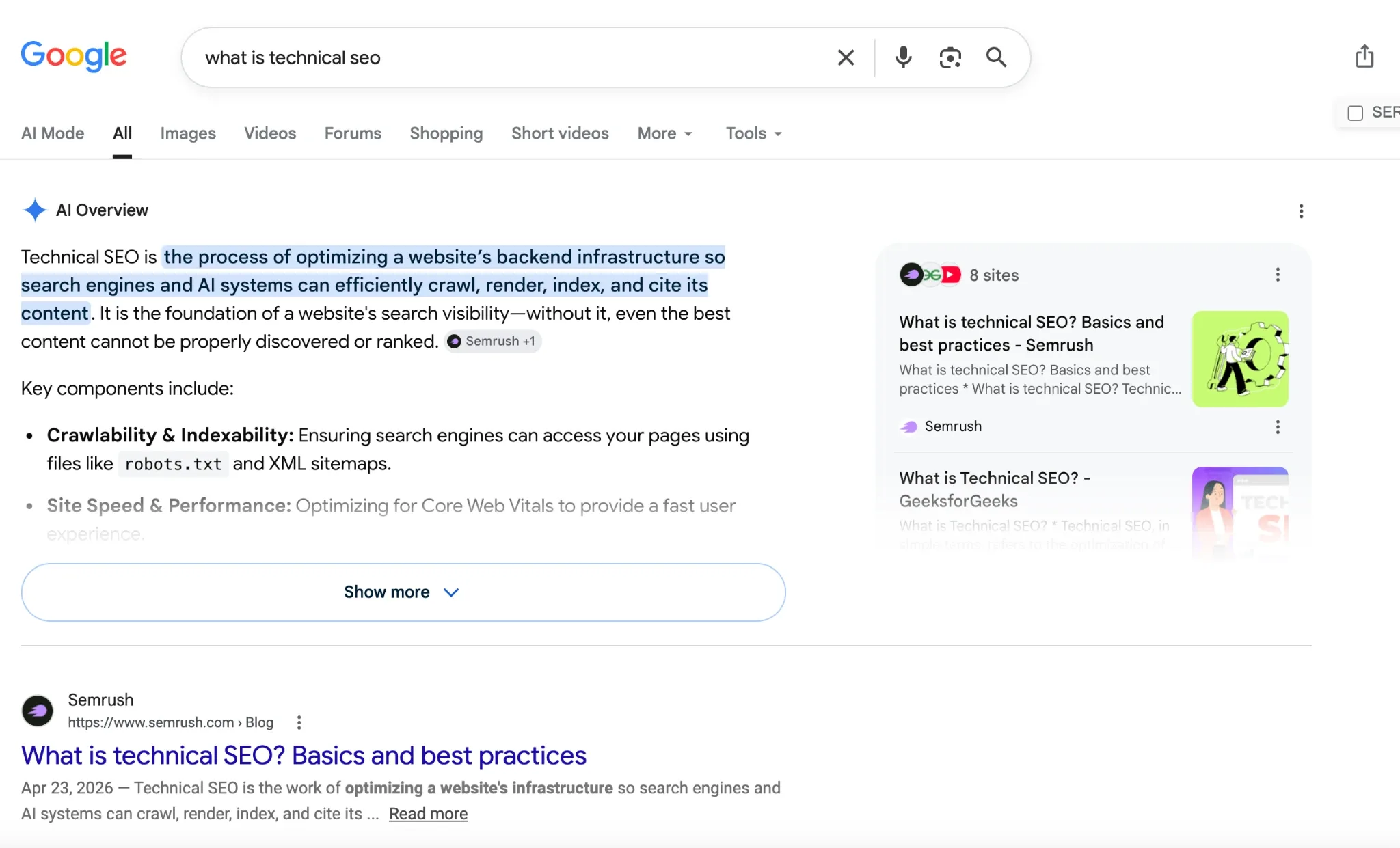
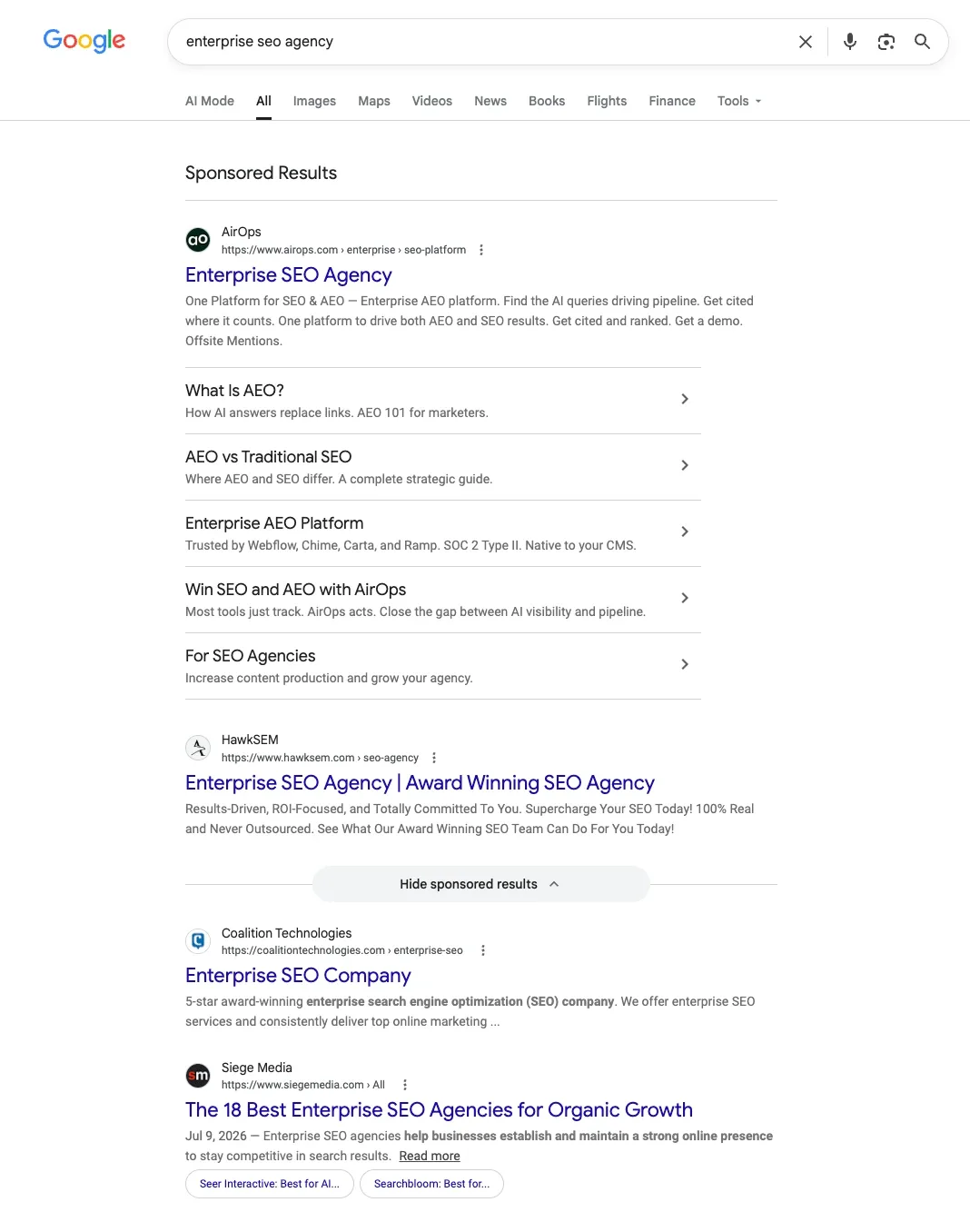
See how different the SERP is just by the change of intent? That is why a strong on-page SEO strategy starts with understanding where your audience sits in the buying journey rather than just chasing high-volume keywords.
We’ve found that a common reason service pages underperform isn't a lack of optimization. It’s a mismatch between the content and the visitor's stage in the buying journey. HubSpot's 2026 data notes that while AI and modern search changes have altered overall traffic patterns, consumers are coming to websites later in the process with much higher intent and better education.
We saw this play out when we partnered with Maxair Mechanical. Their service pages were functional but thin, which meant they were ranking for broad informational queries rather than the high-intent searches that actually drive business. Instead of just adding more keywords, we restructured the content around commercial intent, clarified the services, strengthened internal linking, and created a clearer path from education to conversion.
The result was content that attracted visitors who were actively evaluating HVAC services instead of casually researching the topic. You can read the full case study here.
2. Reduce Decision Friction
One of the biggest mistakes we encounter isn't the lack of metadata. It’s content that explains a topic without helping visitors make a decision.
Every page should quickly answer questions like:
Who is this for?
What problem does it solve?
Why is this company different?
What should I do next?
If visitors have to hunt for those answers, conversion suffers, even if your rankings improve.
3. Build Context, Not Just Keywords
Search engines understand relationships between topics far better than they once did.
Instead of forcing exact-match keywords throughout a page, focus on building comprehensive resources that naturally answer follow-up questions, introduce related concepts, and connect to supporting content across your website. That creates topical authority rather than isolated pages competing on individual keywords.
We’ve noticed that organizations often focus on answering more questions rather than the right ones. High-performing pages don't try to cover every tangent. They anticipate the specific information users need right before they are ready to take action. In fact, SEO performance data from Backlinko highlights that comprehensive pages ranking on Google's first page contain an average of 1,447 words of contextual depth, proving that depth and thoroughness outperform thin keyword stuffing every time.
By aligning the page with the information prospective buyers actually need to make a decision, you remove the uncertainty that causes visitors to bounce.
4. Optimize for Trust
Search engines and buyers are both looking for evidence. That means demonstrating experience through:
Original insights
Real client examples
Proprietary data
Subject matter expertise
Transparent recommendations
Anyone can summarize SEO best practices. Fewer organizations can explain what happens when those practices are applied across hundreds of real client engagements. That’s the type of expertise modern search increasingly rewards.
Modern On-Page SEO Goes Beyond Keywords
Today's search engines reward pages that demonstrate expertise, satisfy search intent, and create a seamless user experience. Our On-Page SEO Services help businesses optimize their content, site structure, and conversion paths to improve visibility and drive measurable business growth.
What This Looks Like in Practice
The greatest on-page improvements rarely come from changing a title tag. They come from changing how a page helps people make decisions.
We’ve seen this pattern across many industries. Whether we’re improving service pages for a B2B software company or restructuring landing pages for a home services business, the biggest gains typically come from aligning content with buying behavior. You get more out of that than you do from squeezing another keyword into a heading.
The Future of On-Page SEO is Human-Centered
As AI becomes more integrated into search, the fundamentals of great on-page SEO are becoming surprisingly human.
The pages that earn visibility are the ones that communicate expertise clearly, anticipate follow-up questions, and give visitors the confidence to act. Metadata still matters. Technical optimization still matters. But those elements simply make your content eligible to compete.
What separates exceptional pages is their ability to reduce friction, for search engines trying to understand them and for people trying to make decisions. That’s the standard we believe modern on-page SEO should be measured against.
Ready to Turn Traffic Into Pipeline?
Traffic is easy to measure, but generating pipeline is what matters most.
If your service pages are earning impressions but struggling to generate qualified leads, the problem may not be another missing keyword. It may be that your content isn't aligned with how prospective customers actually evaluate solutions.
Learn how our On-Page SEO Services help organizations build pages that don't just rank. They earn trust, support buying decisions, and drive measurable business growth.
Want more insights like these delivered to your inbox? Subscribe to our ShopTalk newsletter for the latest digital marketing tips, industry updates, and practical resources from our team.