
Search intent is the reason behind a search query. It reflects what someone hopes to accomplish when they use a search engine, whether they’re looking to learn something, find a specific website, compare products or services, or make a purchase. Understanding search intent helps marketers create content that matches user expectations, improves visibility in search results, and drives more qualified traffic and leads.
Every search starts with a goal. Whether someone types “what is search intent,” “best CRM software,” or “SEO agency near me,” they expect Google to understand what they’re trying to accomplish and deliver the right result. Sometimes, they’re looking for an answer to a question. Other times they’re comparing solutions, researching a purchase, or trying to reach a specific website.
That underlying goal is known as search intent (also called searcher intent or user intent), and it has become one of the most important concepts in SEO as we know it today. Search engines analyze the purpose behind a query to determine which pages are most likely to satisfy the searcher’s needs.
As search experiences have expanded to include AI Overviews, AI-powered assistants, and conversational search, understanding intent has become even more important. Brands today need to answer the right questions, present information in the right format, and help users accomplish what they set out to do.
Why Search Intent Matters
Search intent shapes every search result you see. Google doesn't simply look for pages that include the right keywords. Its goal is to deliver content that best answers a searcher's question or helps them complete the task they had in mind.
Think about the difference between someone searching "what is technical SEO" and "technical SEO services." The keywords are similar, but the goals are completely different. One person wants to learn, while the other is evaluating companies that can help. Because the intent is different, the pages that rank should be different too.
This is why successful SEO starts with understanding the person behind the search. When your content aligns with what users expect to find, it has a better chance of ranking well, earning clicks, and providing a positive experience. The same principle applies to AI-powered search experiences, which rely on content that clearly answers questions and addresses the underlying purpose of a query.
The Four Types of Search Intent
Although every search is unique, most queries fall into one of four primary categories. Understanding these intent types can help you identify what users expect to find and create content that aligns with those expectations.
Informational:
Informational intent describes searches where the user wants to learn something, answer a question, or better understand a topic. Rather than looking to make a purchase, they're searching for helpful information that expands their knowledge or solves a problem.
These searches often begin with words like what, how, why, or when, but that's not always the case. A query like SEO checklist or keyword research is also informational because the goal is to find guidance or learn how something works.
What the user wants: To learn or answer a question
Example searches: what is search intent, how does SEO work
Best content format: Guides, blog posts, glossary pages
Navigational:
Navigational intent occurs when someone already knows where they want to go and uses a search engine to get there quickly. These searches usually include a brand, website, or product name, and the expectation is to land on a specific page.
What the user wants: To reach a specific website or page
Example searches: Workshop Digital, Google Search Console
Best content format: Homepage, login pages, branded pages
Commercial:
Commercial intent reflects the research phase of the buying journey. Searchers are evaluating products, services, or providers before making a decision, often comparing features, pricing, or reviews.
What the user wants: To research before making a purchase or decision
Example searches: best SEO agencies, Ahrefs vs. Semrush
Best content format: Comparison pages, reviews, buying guides
Transactional:
Transactional intent signals that a user is ready to take action. Whether they're requesting a quote, booking a demo, or making a purchase, these searches indicate a clear desire to complete a conversion.
What the user wants: To complete an action or make a purchase
Example searches: hire an SEO agency, request an SEO audit
Best content format: Service pages, product pages, landing pages
Rather than thinking of these as isolated categories, consider them stages in a decision-making process. A person may begin by researching a topic, compare available options, and eventually take action. Understanding where someone is in that journey helps you create content that answers the right questions at an ideal time.
How to Identify Search Intent
The easiest way to identify search intent is to look at the search results. Google has already analyzed what users expect to find, and the pages that rank at the top provide valuable clues about the dominant intent behind a query.
As you review the search results, pay close attention to:
The content format. Are the top-ranking pages blog posts, product pages, comparison articles, videos, or tools?
The page titles. Do they focus on answering a question, comparing options, or encouraging users to take action?
Search features. Look for AI Overviews, Featured Snippets, People Also Ask, local results, shopping listings, or videos. These often signal the type of content Google believes best satisfies the query.
The language used. Words like best, compare, pricing, buy, and services often indicate commercial or transactional intent, while what, how, and guide typically suggest informational intent.
Example: Search Intent on the Search Engine Results Page (SERP)
Compare the search results below for "what is on-page SEO" and "on-page SEO services." Although the topics are related, Google displays very different results because the goals behind each search are different.
"What is on-page SEO" (Informational Intent)
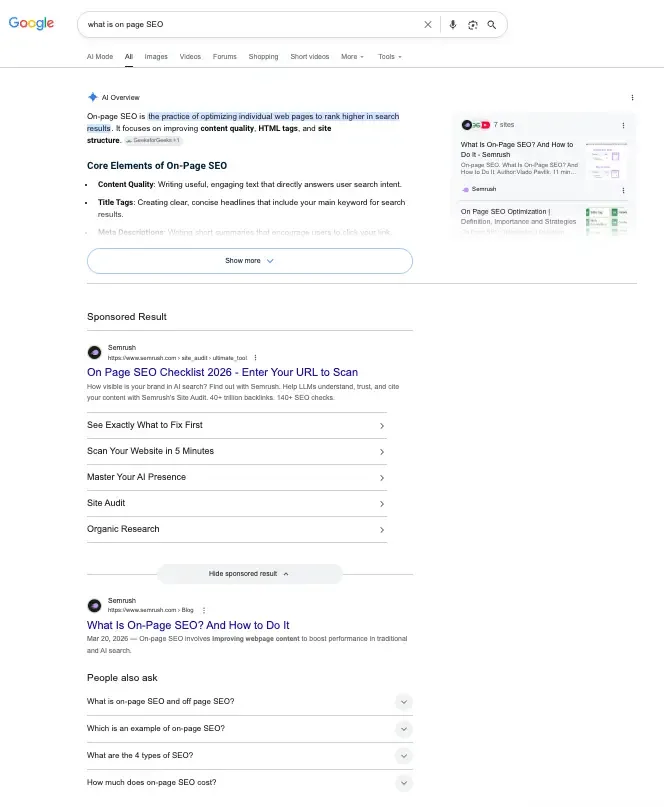
What you'll notice:
An AI Overview that answers the question immediately
Educational articles from trusted SEO publications
A People Also Ask section with related questions
Guides and blog posts instead of service pages
This tells us users are looking to learn, so Google prioritizes educational content that explains the topic.
"On-page SEO services" (Transactional Intent)
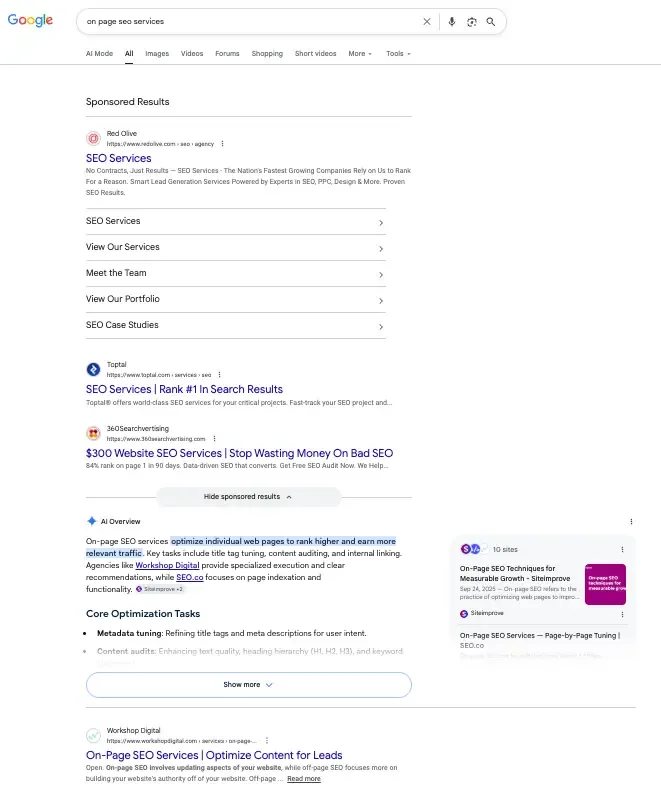
What you'll notice:
Multiple paid ads at the top of the page
An AI Overview focused on services rather than definitions
Service pages from SEO agencies
Little to no educational content in the top results
Here, Google recognizes that users are looking for a provider, so it surfaces pages designed to help them compare agencies or contact a business.
Takeaway: Before creating content for any keyword, spend a few minutes reviewing the search results. The format, features, and types of pages that rank will tell you far more about search intent than the keyword alone.
Why Search Intent Matters for SEO
Search intent influences nearly every aspect of an SEO strategy, from keyword research and content creation to on-page optimization and conversion rates. Even the most well-written page can struggle to rank if it doesn’t align with what users expect to find.
For example, imagine you’re targeting the keyword “SEO Audit.” If the search results are filled with educational guides explaining what an SEO audit is, publishing a service page that promotes your agency may not satisfy the dominant intent. On the other hand, if users are searching for “SEO Audit Services,” a detailed service page is far more likely to meet their expectations than a blog post.
Matching search intent helps you:
Improve organic rankings by aligning content with Google's expectations
Increase click-through rates by delivering the information users are looking for
Keep visitors engaged by answering their questions more effectively
Attract more qualified traffic that is more likely to convert
Build trust by providing helpful, relevant content at every stage of the customer journey
Rather than asking, "What keyword should I target?" start by asking, "What is the user trying to accomplish?" When your content answers that question, you're creating pages that serve both search engines and the people using them.
Search Intent Importance to AI Search
This is where search intent has become even more important.
AI-powered search experiences, including AI Overviews and conversational assistants, are designed to answer questions, recommend resources, and guide users toward the next step in their journey. To do that effectively, they first need to understand the user's intent.
Whether someone is looking to learn, compare solutions, or make a purchase, AI systems evaluate the same signals that search engines have relied on for years: the wording of the query, the context behind it, and the type of content that has consistently helped users accomplish their goals.
For marketers, that means the fundamentals haven't changed. Creating content that aligns with search intent is still one of the best ways to earn visibility. The difference is that your content may now be surfaced in AI-generated answers, cited as a source, or recommended before a user ever clicks through to a website.
Build Content That Matches Search Intent
The best-performing content doesn't just target keywords. It answers questions, solves problems, and gives users exactly what they came looking for.
If you're evaluating your content strategy, start by reviewing the intent behind the keywords you're targeting. You may discover opportunities to improve existing pages, create new resources, or better align your content with what your audience expects to find.
Looking for expert guidance? Learn how Workshop Digital's SEO team develops content strategies built around search intent and long-term organic growth.